


 by Workfile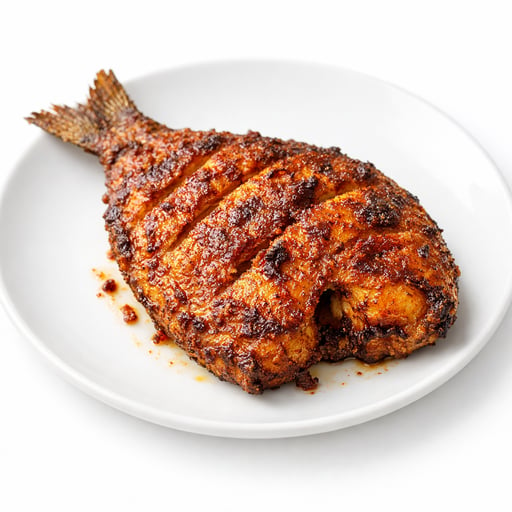
Fried fish
Also known as: Fried Fish, Tali hui machli, Indian style
Indian-style fried fish, a popular dish where fish pieces are marinated and shallow or deep-fried until crisp.
Nutrition per 100g
Nutrient Breakdown
Key Nutrients(16)
% DV = % Daily Value (adult RDA, ICMR 2020). Values per 100g edible portion.
Use Fried fish in meal plans
17,000+ foods with real-time nutrient tracking, AI generation, and WhatsApp sharing.
Start FreeFree plan · No credit card
Common questions about Fried fish
How many calories are in 1 piece of Fried fish?
1 piece (354 g) of Fried fish has about 2331 kcal, based on 659 kcal per 100 g.
How much protein is in Fried fish?
Fried fish provides about 4.3 g of protein per 100 g.
How much sugar does Fried fish contain?
Fried fish has about 0.4 g of total sugars per 100 g.
How is fried fish typically prepared in Indian cooking?
Fish is marinated with spices, coated with flour or batter, and shallow or deep-fried in oil until crisp.
Is fried fish suitable for vegetarian diets?
No, fried fish contains fish and is classified as non-vegetarian.
How should fried fish be stored to maintain freshness?
Fried fish is best consumed fresh; if storing, keep it refrigerated in an airtight container and consume within 1-2 days to preserve quality.
About Fried fish
Fried fish is a widely enjoyed Indian seafood dish featuring fish fillets marinated with spices and coated with batter or dry flour before being shallow or deep-fried to a crisp golden texture. It is commonly served as a snack, appetizer, or part of a main meal across many coastal and inland regions of India.
This preparation is notable for its flavorful crust and tender fish inside. It provides significant amounts of Vitamin E and Selenium, important antioxidants, as shown by actual nutrient data. The dish contains moderate protein and fat from fish and frying oil.
- Contains significant Vitamin E and Selenium, based on verified nutrient data.
- Suitable for non-vegetarian diets.
- Commonly consumed at lunch, dinner, or as a snack.
Unlike raw fish, frying increases fat content and energy density. Preparation methods and oil amount will vary nutrient levels.
Values per 100g edible portion.
Nutrition data is for reference only. Values may vary by preparation method, brand, and region. Full disclaimer
Contains data from Indian Nutrient Databank (INDB), University of Edinburgh, licensed under CC BY 4.0, modified for presentation.
Report a data issueSimilar foods
Browse all →Fried fish and Chips
Fish curry
Tandoori fish
Fish cutlet
Fish in coconut milk
Bengal fish curry
Fish tikka
Fish finger