

 by Workfile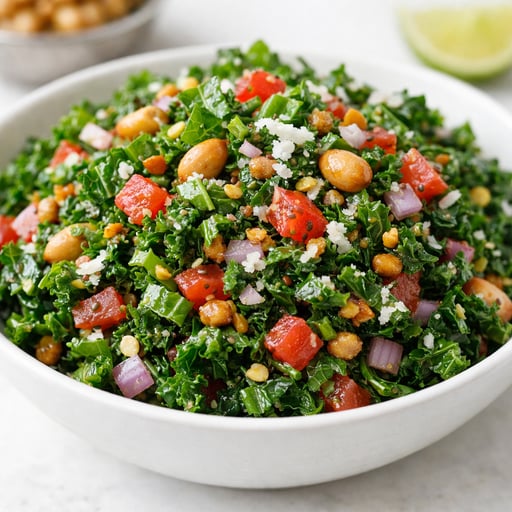
Kale salad
Also known as: Kale Salad
A fresh and nutritious kale salad, often topped with various vegetables and a dressing, making it a great addition to any meal.
Nutrition per 100g
Nutrient Breakdown
Key Nutrients(16)
% DV = % Daily Value (adult RDA, ICMR 2020). Values per 100g edible portion.
Use Kale salad in meal plans
17,000+ foods with real-time nutrient tracking, AI generation, and WhatsApp sharing.
Start FreeFree plan · No credit card
Common questions about Kale salad
How many calories are in 1 bowl of Kale salad?
1 bowl (54 g) of Kale salad has about 96 kcal, based on 178 kcal per 100 g.
How much protein is in Kale salad?
Kale salad provides about 4.9 g of protein per 100 g.
How much sugar does Kale salad contain?
Kale salad has about 3.3 g of total sugars per 100 g.
Is kale salad suitable for vegan diets?
Yes, kale salad is vegan as it contains no animal products unless added separately.
What is the common use of kale salad in meals?
Kale salad is often served as a side dish with lunch or dinner or eaten as a healthy snack.
How should kale salad be stored?
Store kale salad covered in the refrigerator and consume within 1-2 days for best freshness.
About Kale salad
Kale salad is a vibrant dish made primarily from leafy kale, known for its dense nutritional profile. Often mixed with other fresh vegetables like tomatoes, cucumbers, and carrots, it's commonly dressed with olive oil or vinegar.
Nutrition Highlights: Kale is rich in vitamins A, C, and K, making it an excellent choice for boosting immunity and promoting eye health. It also provides dietary fiber, which aids in digestion. This salad serves as a refreshing way to incorporate more leafy greens into your diet.
- High in antioxidants
- Good source of calcium and iron
- Suitable for vegetarian and vegan diets
Enjoy this salad as a light lunch, evening snack, or as a side dish with dinner, and feel good about adding such nutrient-dense ingredients to your plate.
Values per 100g edible portion.
Nutrition data is for reference only. Values may vary by preparation method, brand, and region. Full disclaimer
Contains data from Indian Nutrient Databank (INDB), University of Edinburgh, licensed under CC BY 4.0, modified for presentation.
Report a data issue