


 by Workfile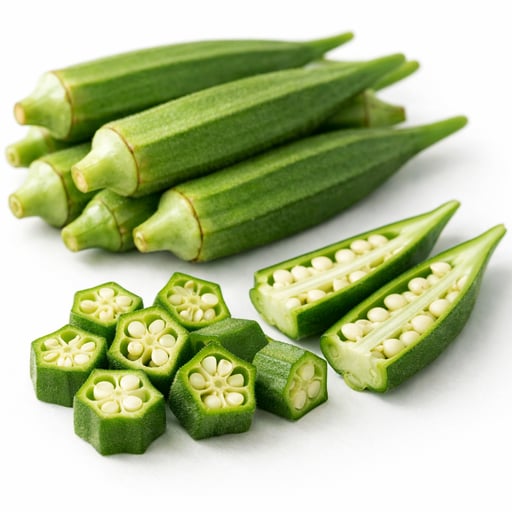
Ladies finger
Bhindi
Abelmoschus esculentus
Also known as: Bhendi, Dherosh, Okra, Okro, Ochro, Bhinda, Bende, Bindi
Ladies finger (Bhindi) is a commonly used vegetable in Indian cuisine, known for its edible seed pods. It is often cooked with spices in various dishes and has a mucilaginous texture when cooked.
Nutrition per 100g
Nutrient Breakdown
Key Nutrients(16)
% DV = % Daily Value (adult RDA, ICMR 2020). Values per 100g edible portion.
Use Ladies finger in meal plans
17,000+ foods with real-time nutrient tracking, AI generation, and WhatsApp sharing.
Start FreeFree plan · No credit card
Common questions about Ladies finger
How many calories are in 1 katori cooked sabzi of Ladies finger?
1 katori cooked sabzi (150 g) of Ladies finger has about 41 kcal, based on 27 kcal per 100 g.
How much protein is in Ladies finger?
Ladies finger provides about 2.1 g of protein per 100 g.
How much sugar does Ladies finger contain?
Ladies finger has about 0.5 g of total sugars per 100 g.
How is Ladies Finger commonly used in cooking?
Ladies finger is commonly sliced and cooked in stir-fries, curries, or fried as a vegetable side dish in Indian cuisine.
Is Ladies Finger suitable for a vegan diet?
Yes, ladies finger is a plant-based vegetable and suitable for vegan diets.
How should Ladies Finger be stored to maintain freshness?
Store fresh ladies finger in a cool, dry place or refrigerated in a perforated bag to keep it fresh for several days.
About Ladies finger
Ladies finger, also called Bhindi in Hindi, is a popular vegetable cultivated widely in India and other tropical regions. The plant produces long, slender edible seed pods that are commonly prepared by sautéing, frying, or adding to curries and stir-fries.
It is notable for containing significant amounts of Vitamin K, Vitamin C, Folate (B9), Magnesium, and Chromium, providing nutritional benefits especially relevant for balanced diets. The vegetable is low in calories and fat but contains dietary fiber and essential micronutrients.
Consumers appreciate its versatility in cooking and its distinct texture, which thickens dishes due to its mucilaginous nature when cooked. Being a vegan food, it is suitable for various dietary preferences and contains no common allergens.
Values per 100g edible portion.
Nutrition data is for reference only. Values may vary by preparation method, brand, and region. Full disclaimer
Similar foods
Browse all →
Okra/Lady's fingers fry
Crispy okra/Crispy lady's fingers
Brinjal - all varieties
Baingan
Broad beans
Bakla
Brinjal-11
Baingan
Brinjal-14
Baingan
Brinjal-13
Baingan
Brinjal-15
Baingan