

 by Workfile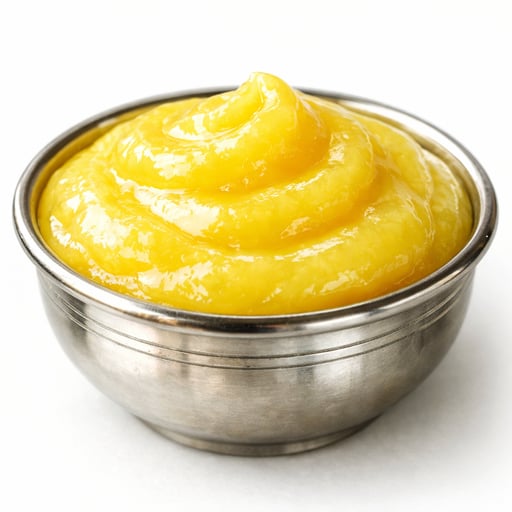
Lemon curd filling
Also known as: LEMON CURD FILLING
A creamy, sweet-tart dessert filling made primarily from lemon juice, sugar, eggs, and butter, commonly used in pastries and tarts.
Nutrition per 100g
Nutrient Breakdown
Key Nutrients(13)
% DV = % Daily Value (adult RDA, ICMR 2020). Values per 100g edible portion.
Use Lemon curd filling in meal plans
17,000+ foods with real-time nutrient tracking, AI generation, and WhatsApp sharing.
Start FreeFree plan · No credit card
Common questions about Lemon curd filling
How many calories are in 1 tablespoon of Lemon curd filling?
1 tablespoon (25 g) of Lemon curd filling has about 56 kcal, based on 226 kcal per 100 g.
How much protein is in Lemon curd filling?
Lemon curd filling provides about 3.4 g of protein per 100 g.
How much sugar does Lemon curd filling contain?
Lemon curd filling has about 26.1 g of total sugars per 100 g.
Is lemon curd filling vegetarian?
Yes, lemon curd filling is vegetarian but contains eggs and dairy, so it is not vegan.
How can lemon curd filling be used in cooking?
It is commonly used as a spread or filling for cakes, pastries, and tarts to add a sweet and tangy flavor.
How should lemon curd filling be stored?
Lemon curd filling should be stored refrigerated in a sealed container and used within a week for best freshness.
About Lemon curd filling
Lemon curd filling is a smooth, creamy spread or dessert component made by cooking lemon juice, sugar, eggs, and butter until thickened. Originating from English cuisine, it is popular worldwide as a filling for cakes, pastries, and tarts, lending a tangy and sweet flavor.
This lemon curd filling provides significant amounts of selenium and vitamin A, important micronutrients as per the analysis data. It contains moderate protein and fat due to its egg and butter content, and is high in sugars, contributing to its rich energy content.
- Commonly enjoyed in desserts and sweet snacks.
- Vegetarian but not vegan due to the use of eggs and butter.
- Provides selenium and vitamin A as key nutrients in line with verified nutrient data.
Values per 100g edible portion.
Nutrition data is for reference only. Values may vary by preparation method, brand, and region. Full disclaimer
Contains data from Indian Nutrient Databank (INDB), University of Edinburgh, licensed under CC BY 4.0, modified for presentation.
Report a data issue