


 by Workfile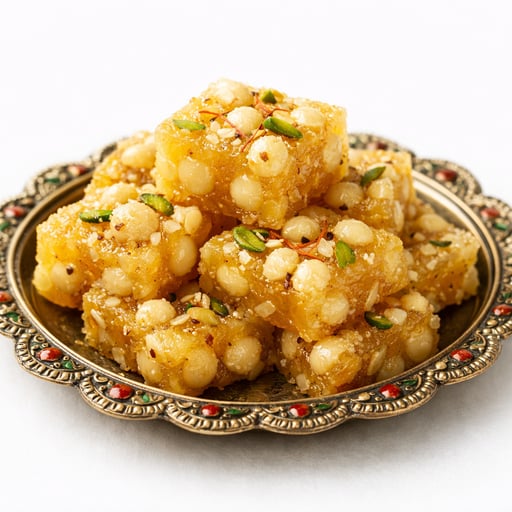
Lotus seed halwa
Also known as: Lotus seed halwa, Kamal gattay ka halwa
Lotus Seed Halwa is a traditional Indian sweet dish made from lotus seeds cooked with sugar and ghee, offering a rich, mildly nutty flavor and a soft texture.
Nutrition per 100g
Nutrient Breakdown
Key Nutrients(20)
% DV = % Daily Value (adult RDA, ICMR 2020). Values per 100g edible portion.
Use Lotus seed halwa in meal plans
17,000+ foods with real-time nutrient tracking, AI generation, and WhatsApp sharing.
Start FreeFree plan · No credit card
Common questions about Lotus seed halwa
How many calories are in 1 piece of Lotus seed halwa?
1 piece (362 g) of Lotus seed halwa has about 1341 kcal, based on 371 kcal per 100 g.
How much protein is in Lotus seed halwa?
Lotus seed halwa provides about 7.8 g of protein per 100 g.
How much sugar does Lotus seed halwa contain?
Lotus seed halwa has about 9.8 g of total sugars per 100 g.
Is Lotus Seed Halwa vegetarian?
Yes, Lotus Seed Halwa is vegetarian as it contains no meat or eggs but includes dairy (ghee).
How is Lotus Seed Halwa typically served?
It is typically served as a sweet dessert during festivals or special occasions, either warm or at room temperature.
How should Lotus Seed Halwa be stored?
Store in an airtight container in the refrigerator, where it can keep fresh for up to 4-5 days.
About Lotus seed halwa
Lotus Seed Halwa, also known as Makhana Halwa, is a popular Indian dessert made by cooking lotus seeds with sugar, ghee, and sometimes cardamom for added aroma. It is enjoyed during festivals and special occasions across India. This sweet is prized for its distinctive texture and slightly nutty taste, which comes from the lotus seeds themselves.
This dish provides significant amounts of phosphorus, manganese, magnesium, thiamine (B1), vitamin E, folate (B9), vitamin B6, and vitamin A (RAE), making it a nutrient-rich dessert choice among traditional Indian sweets. Consumers can enjoy this dessert as a vegetarian option, mindful of its moderate caloric content largely from sugars and fats.
- Made primarily from lotus seeds, sugar, and ghee
- Serves as a traditional festive sweet, often homemade
- Contains essential micronutrients as evidenced by nutrient data
- Suitable for vegetarians but not vegan due to ghee content
Enjoy Lotus Seed Halwa in moderate portions as part of a balanced diet.
Values per 100g edible portion.
Nutrition data is for reference only. Values may vary by preparation method, brand, and region. Full disclaimer
Contains data from Indian Nutrient Databank (INDB), University of Edinburgh, licensed under CC BY 4.0, modified for presentation.
Report a data issueSimilar foods
Browse all →Carrot halwa
Semolina halwa
Pumpkin halwa
Gram flour halwa
Egg halwa
Potato halwa
Moong dal halwa
Gulab Jamun with khoya