


 by Workfile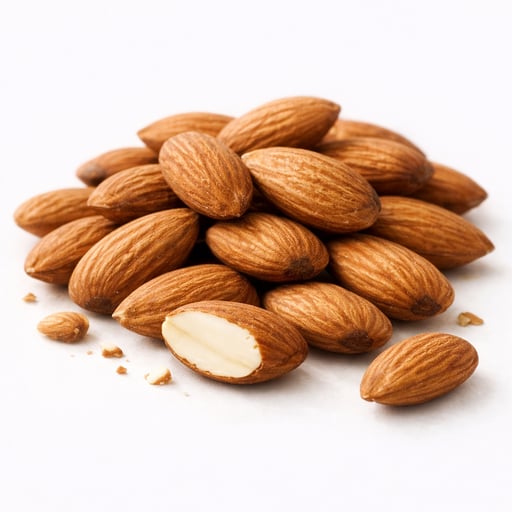
Almonds nuts
बादाम
Prunus dulcis
Almonds are a popular nut rich in Vitamin E, copper, magnesium, and protein. They are consumed raw or roasted as a nutritious snack or ingredient in Indian cuisine.
Nutrition per 100g
Nutrient Breakdown
Key Nutrients(18)
% DV = % Daily Value (adult RDA, ICMR 2020). Values per 100g edible portion.
Use Almonds nuts in meal plans
17,000+ foods with real-time nutrient tracking, AI generation, and WhatsApp sharing.
Start FreeFree plan · No credit card
Common questions about Almonds nuts
How many calories are in oz (23 whole kernels) of Almonds nuts?
oz (23 whole kernels) (28 g) of Almonds nuts has about 164 kcal, based on 579 kcal per 100 g.
How much protein is in Almonds nuts?
Almonds nuts provides about 21.2 g of protein per 100 g.
How much sugar does Almonds nuts contain?
Almonds nuts has about 4.4 g of total sugars per 100 g.
How are almonds commonly used in Indian cuisine?
Almonds are eaten raw, roasted, or added to sweets, desserts, and garnishes in Indian cooking.
Are almonds suitable for vegans?
Yes, almonds are plant-based and suitable for a vegan diet.
What is the best way to store almonds?
Store almonds in an airtight container in a cool, dry place to retain freshness and prevent rancidity.
About Almonds nuts
Almonds are edible seeds of the almond tree and commonly consumed as nuts in many parts of the world, including India. They are often eaten raw, roasted, or used in sweets and savory dishes to add flavor and nutritional value. Almonds provide significant amounts of Vitamin E, copper, magnesium, and protein, making them a nutrient-dense snack choice.
They contain high dietary fiber and are a good source of several minerals like phosphorus and manganese. Being a vegan food, almonds are widely favored as a healthy plant-based protein source. Almonds can be enjoyed as a standalone snack or incorporated into dishes such as halwa, badam milk, and baked goods.
- Rich in Vitamin E and copper
- Good source of magnesium and protein
- Contains dietary fiber and essential minerals
Almonds are considered allergenic for some individuals sensitive to nuts and should be consumed with caution by people with nut allergies.
Values per 100g edible portion.
Nutrition data is for reference only. Values may vary by preparation method, brand, and region. Full disclaimer
Similar foods
Browse all →Nuts, almonds, whole, raw
Nuts, almond paste
Nuts, almonds, blanched
Pecans nuts
Nuts, almonds, oil roasted, lightly salted
Nuts, almonds, honey roasted, unblanched
Nuts, almonds, oil roasted, with salt added
Nuts, pine nuts, dried