


 by Workfile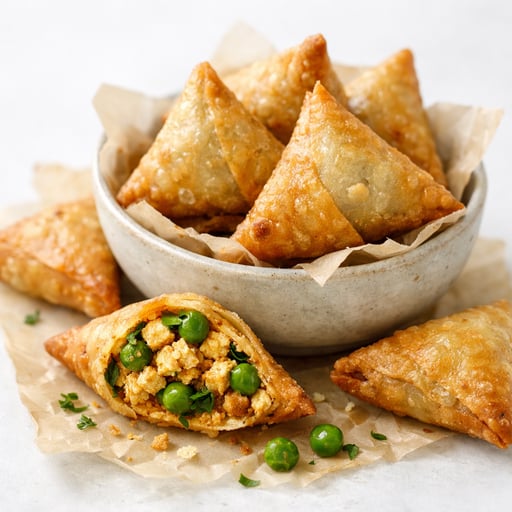
Paneer and pea samosa
Also known as: Samosa - Paneer and Pea Filling, Paneer matar ka samosa
Paneer and pea samosas are delicious deep-fried pastries filled with a savory mixture of paneer and green peas, spiced to perfection. They are a popular choice for snacks at social gatherings and street food stalls.
Nutrition per 100g
Nutrient Breakdown
Key Nutrients(14)
% DV = % Daily Value (adult RDA, ICMR 2020). Values per 100g edible portion.
Use Paneer and pea samosa in meal plans
17,000+ foods with real-time nutrient tracking, AI generation, and WhatsApp sharing.
Start FreeFree plan · No credit card
Common questions about Paneer and pea samosa
How many calories are in 1 samosa of Paneer and pea samosa?
1 samosa (135 g) of Paneer and pea samosa has about 842 kcal, based on 624 kcal per 100 g.
How much protein is in Paneer and pea samosa?
Paneer and pea samosa provides about 4 g of protein per 100 g.
How much sugar does Paneer and pea samosa contain?
Paneer and pea samosa has about 1.7 g of total sugars per 100 g.
What is the main culinary use of paneer and pea samosa?
It is commonly served as a deep-fried snack or appetizer in Indian cuisine, often during tea time or social events.
Is paneer and pea samosa vegetarian?
Yes, it is vegetarian as it contains paneer (dairy) and peas, with no meat or eggs.
How should paneer and pea samosa be stored?
Store in an airtight container in a cool place and consume within a day or two; best eaten fresh and hot for optimal taste.
About Paneer and pea samosa
Paneer and Pea Samosas are a traditional Indian snack made from a crispy outer shell filled with a delightful mix of paneer (cottage cheese) and peas. Often seasoned with spices like cumin, coriander, and garam masala, these samosas offer a rich and savory taste that is loved across the country.
They are generally deep-fried until golden brown, giving them a crispy texture that contrasts beautifully with the soft filling inside. Samosas can be enjoyed on their own or paired with tamrind chutney or mint chutney for an added burst of flavor.
In terms of nutrition, these samosas provide a good source of protein and carbohydrates, making them a satisfying snack. However, due to their preparation methods, they are higher in fat, so moderation is key for healthier eating choices. Suitable for vegetarian diets, they make a great addition to snack platters or festive occasions.
Values per 100g edible portion.
Nutrition data is for reference only. Values may vary by preparation method, brand, and region. Full disclaimer
Contains data from Indian Nutrient Databank (INDB), University of Edinburgh, licensed under CC BY 4.0, modified for presentation.
Report a data issueSimilar foods
Browse all →
Minced meat samosa
Vegetable samosa
Potato samosa
Paneer pakora/pakoda
Paneer cutlet
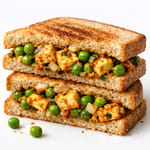
Paneer pea sandwich
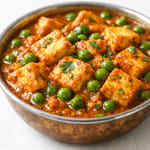
Pea paneer curry
Paneer potato cutlet