


 by Workfile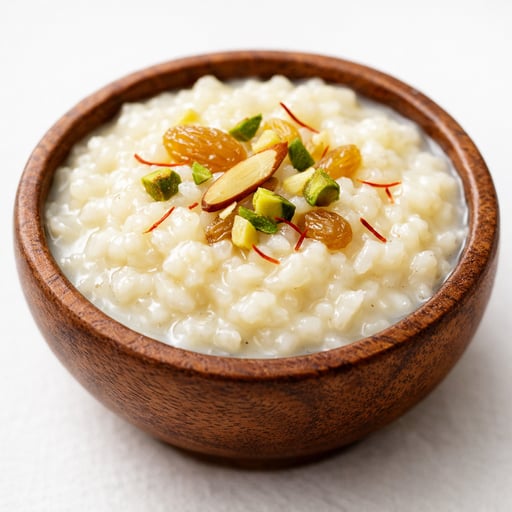
Rice kheer
Also known as: Rice Kheer, Chawal ki kheer
Rice Kheer is a traditional Indian dessert made by cooking rice in sweetened milk, flavored often with cardamom and garnished with nuts. It is commonly served during festivals and special occasions.
Nutrition per 100g
Nutrient Breakdown
Key Nutrients(13)
% DV = % Daily Value (adult RDA, ICMR 2020). Values per 100g edible portion.
Use Rice kheer in meal plans
17,000+ foods with real-time nutrient tracking, AI generation, and WhatsApp sharing.
Start FreeFree plan · No credit card
Common questions about Rice kheer
How many calories are in 1 bowl of Rice kheer?
1 bowl (401 g) of Rice kheer has about 301 kcal, based on 75 kcal per 100 g.
How much protein is in Rice kheer?
Rice kheer provides about 2.3 g of protein per 100 g.
How much sugar does Rice kheer contain?
Rice kheer has about 8 g of total sugars per 100 g.
What is rice kheer made of?
Rice kheer is made by cooking rice in milk with added sugar and flavorings like cardamom.
Is rice kheer a vegetarian dish?
Yes, rice kheer is a vegetarian sweet dish containing dairy but no meat or eggs.
How should rice kheer be stored?
Rice kheer should be refrigerated and consumed within 2-3 days for best quality and safety.
About Rice kheer
Rice Kheer is a beloved Indian sweet dish that combines rice cooked in milk with sugar and aromatic spices like cardamom. Originating from Indian cuisine, it is traditionally made at home or in celebratory feasts across the country.
This dessert is characterized by its creamy texture and natural sweetness from milk and sugar, with occasional additions like nuts and saffron. It provides moderate calories primarily from carbohydrates and fat, with a small amount of protein from milk.
- Typically enjoyed as a dessert or festive treat.
- Contains dairy and is vegetarian.
- Provides calcium and small amounts of vitamins B12 and A from milk.
- Contains natural sugars from added sugar and milk lactose.
Rice kheer is usually served warm or cold and is a comforting dessert favored for its balance of flavors and creamy consistency.
Values per 100g edible portion.
Nutrition data is for reference only. Values may vary by preparation method, brand, and region. Full disclaimer
Contains data from Indian Nutrient Databank (INDB), University of Edinburgh, licensed under CC BY 4.0, modified for presentation.
Report a data issueSimilar foods
Browse all →
Black rice kheer
Rice dal porridge
Quinoa khichdi/khichri
Vegetable khichdi/khichri
Sago khitchdi/khichri
Boiled rice
Sweet rice
Rice moong dal cheela