


 by Workfile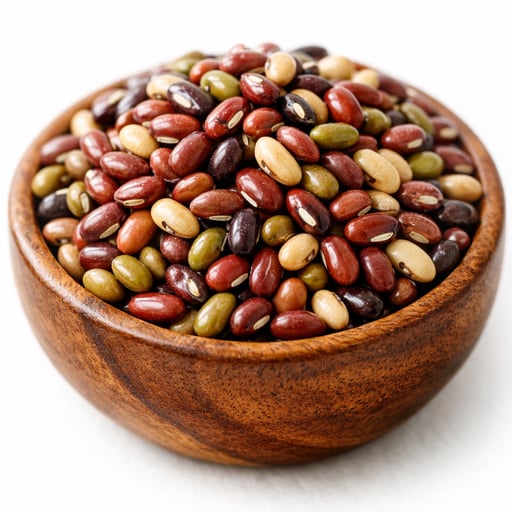
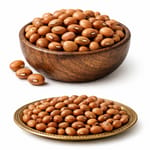
Ricebean
Meth
Vigna umbellata
Also known as: Galmoong, Ricebean, Rymbai ja, Kattuzhunnu, Chakwai, Shiltong.
Ricebean is a nutritious legume commonly cooked and consumed in parts of India, valued for its significant protein, fiber, and mineral content.
Nutrition per 100g
Nutrient Breakdown
Key Nutrients(19)
% DV = % Daily Value (adult RDA, ICMR 2020). Values per 100g edible portion.
Use Ricebean in meal plans
17,000+ foods with real-time nutrient tracking, AI generation, and WhatsApp sharing.
Start FreeFree plan · No credit card
Common questions about Ricebean
How many calories are in 1 katori cooked dal of Ricebean?
1 katori cooked dal (150 g) of Ricebean has about 454 kcal, based on 302 kcal per 100 g.
How much protein is in Ricebean?
Ricebean provides about 20 g of protein per 100 g.
How much sugar does Ricebean contain?
Ricebean has about 1.3 g of total sugars per 100 g.
How is ricebean typically used in cooking?
Ricebean is usually boiled or pressure-cooked and eaten as a dal, served with rice or roti in Indian meals.
Is ricebean suitable for a vegan diet?
Yes, ricebean is a plant-based legume and is fully suitable for vegan diets.
How should ricebean be stored?
Uncooked ricebean should be stored in a cool, dry place in an airtight container to prevent moisture absorption and pest infestation.
About Ricebean
Ricebean is an underutilized legume that grows primarily in eastern India and other parts of South Asia. It is typically cooked like other dals, boiled or pressure-cooked, and served as a protein-rich accompaniment with rice or roti.
This legume is high in protein and fiber, providing a substantial amount of dietary folate as well as important minerals such as copper, magnesium, and manganese. It contains negligible fat and no vitamin B12 or vitamin D since it is plant-based.
Ricebean offers a good balance of macronutrients and is a valuable part of a vegan diet, aiding in providing essential micronutrients. Its earthy flavor and firm texture make it a wholesome component of Indian meals.
- High in protein and fiber
- Good source of folate (Vitamin B9)
- Contains significant minerals like copper, magnesium, and manganese
Values per 100g edible portion.
Nutrition data is for reference only. Values may vary by preparation method, brand, and region. Full disclaimer
Similar foods
Browse all →Brown cowpea
Lobia
Brown field bean
Sem
White field bean
Sem
Black field bean
Sem
White cowpea
Lobia
Rice, raw, brown
Chawal
Moth bean
Motha
Brown soya bean
Bhatmas