


 by Workfile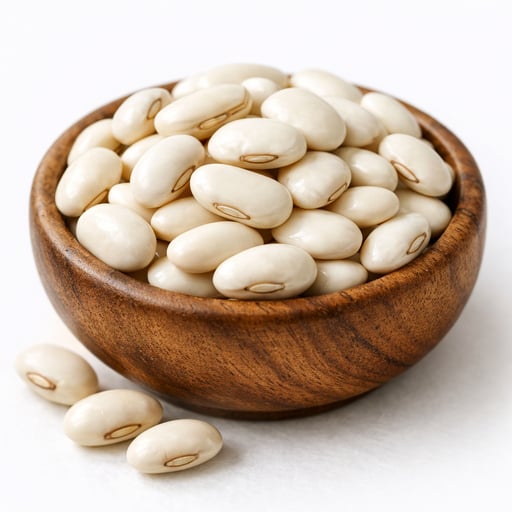
White field bean
Sem
Phaseolus vulgaris
Also known as: Urohi guti, Shim, Common bean, Fieldbean, Broad bean, String bean, Valpapdi, Avare, Moang
Field bean, white is a nutritious pulse widely used in Indian cooking. Commonly cooked in curries or added to salads, it offers a good source of protein and fiber.
Nutrition per 100g
Nutrient Breakdown
Key Nutrients(21)
% DV = % Daily Value (adult RDA, ICMR 2020). Values per 100g edible portion.
Use White field bean in meal plans
17,000+ foods with real-time nutrient tracking, AI generation, and WhatsApp sharing.
Start FreeFree plan · No credit card
Common questions about White field bean
How many calories are in 1 katori cooked dal of White field bean?
1 katori cooked dal (150 g) of White field bean has about 421 kcal, based on 280 kcal per 100 g.
How much protein is in White field bean?
White field bean provides about 19.8 g of protein per 100 g.
How much sugar does White field bean contain?
White field bean has about 1.1 g of total sugars per 100 g.
Is white field bean suitable for a vegan diet?
Yes, white field bean is a plant-based legume and suitable for vegan diets.
What are common culinary uses for cooked white field bean?
It is commonly used in dals, curries, and mixed vegetable dishes in Indian cuisine.
How should cooked field beans be stored?
Cooked field beans should be refrigerated in an airtight container and consumed within 2-3 days for best quality.
About White field bean
Field bean, white is known for its nutritional richness and versatility in the kitchen. This pulse is often a staple in Indian households, used in various preparations such as curries, salads, or as a side dish.
Rich in protein and dietary fiber, field beans provide essential nutrients that support overall health. They are particularly suitable for vegetarians and those looking to increase their protein intake without relying on animal sources. Due to their low glycemic index, they are also a recommended food for diabetic clients.
With a moderate amount of calcium, iron, and potassium, these beans contribute to bone health, blood circulation, and muscle function respectively. They are also a good source of folate, which is important for cell growth and metabolism. Ideal for lunch or dinner, field beans can be included in a variety of recipes, making them a versatile addition to your diet.
Values per 100g edible portion.
Nutrition data is for reference only. Values may vary by preparation method, brand, and region. Full disclaimer
Similar foods
Browse all →
Brown field bean
Sem
Black field bean
Sem
Field beans, tender, lean
Sem
Field beans, tender, broad
Sem
Broad beans
Bakla
White cowpea
Lobia
Cluster beans
Gaur-ki-phalli
Brown cowpea
Lobia