


 by Workfile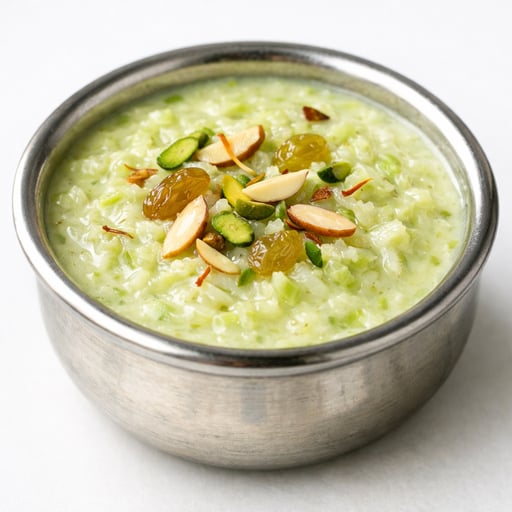
Bottle gourd kheer
Also known as: LAUKI KHEER, Ghiya/Lauki kheer
A traditional Indian dessert made by cooking grated bottle gourd (lauki) with milk, sugar, and flavored with cardamom.
Nutrition per 100g
Nutrient Breakdown
Key Nutrients(13)
% DV = % Daily Value (adult RDA, ICMR 2020). Values per 100g edible portion.
Use Bottle gourd kheer in meal plans
17,000+ foods with real-time nutrient tracking, AI generation, and WhatsApp sharing.
Start FreeFree plan · No credit card
Common questions about Bottle gourd kheer
How many calories are in 1 bowl of Bottle gourd kheer?
1 bowl (268 g) of Bottle gourd kheer has about 225 kcal, based on 84 kcal per 100 g.
How much protein is in Bottle gourd kheer?
Bottle gourd kheer provides about 2.7 g of protein per 100 g.
How much sugar does Bottle gourd kheer contain?
Bottle gourd kheer has about 9.6 g of total sugars per 100 g.
Is bottle gourd kheer suitable for vegetarians?
Yes, bottle gourd kheer is a vegetarian dish typically made with bottle gourd, milk, sugar, and spices.
Does bottle gourd kheer contain any common allergens?
Bottle gourd kheer contains dairy as it is made with milk, which is a common allergen.
About Bottle gourd kheer
Bottle Gourd Kheer is a mildly sweet, creamy dessert popular in many Indian households, especially during festivals and special occasions. It is made by simmering grated bottle gourd (also called lauki, dudhi, or sorakaya) in milk along with sugar and aromatic spices like cardamom. This dish provides a light, pleasant flavor and a delicate texture.
The kheer contributes energy primarily from carbohydrates and fats due to milk and added sugar, with moderate protein from milk. Bottle gourd adds dietary fiber, potassium, and small amounts of vitamins such as vitamin C and A. This dish is vegetarian and does not contain any animal products besides dairy, making it unsuitable for vegans. It is typically served warm or chilled and enjoyed as a dessert after meals.
- Contains moderate sugar and dairy
- Provides calcium, potassium, and small amounts of iron and vitamins
- Suitable for vegetarian diets
This estimation is based on standard homemade preparation using fresh ingredients and moderate amounts of sugar and full-fat milk.
Values per 100g edible portion.
Nutrition data is for reference only. Values may vary by preparation method, brand, and region. Full disclaimer
Contains data from Indian Nutrient Databank (INDB), University of Edinburgh, licensed under CC BY 4.0, modified for presentation.
Report a data issueSimilar foods
Browse all →
Bottle gourd raita
Paneer kheer
Bottle gourd soup
Pumpkin kheer
Cauliflower kheer
Carrot kheer
Cabbage kheer
Stuffed bottle gourd