


 by Workfile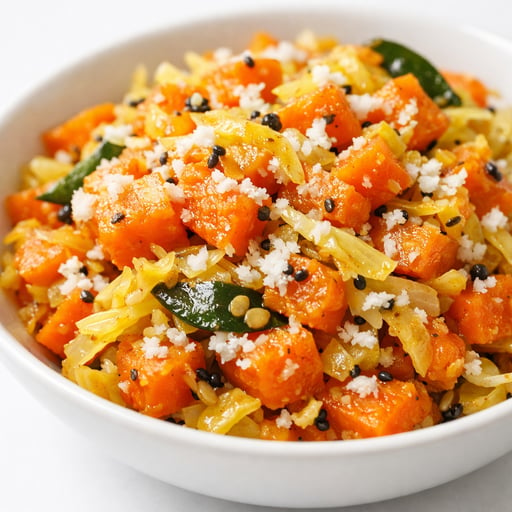
Carrot and cabbage with coconut
Also known as: Carrot and cabbage with coconut, Nariyal ke saath pattagobhi aur gajar
A cooked Indian vegetable dish combining carrot, cabbage, and grated coconut with mild spices, often served as a side dish.
Nutrition per 100g
Nutrient Breakdown
Key Nutrients(15)
% DV = % Daily Value (adult RDA, ICMR 2020). Values per 100g edible portion.
Use Carrot and cabbage with coconut in meal plans
17,000+ foods with real-time nutrient tracking, AI generation, and WhatsApp sharing.
Start FreeFree plan · No credit card
Common questions about Carrot and cabbage with coconut
How many calories are in 1 bowl of Carrot and cabbage with coconut?
1 bowl (200 g) of Carrot and cabbage with coconut has about 213 kcal, based on 107 kcal per 100 g.
How much protein is in Carrot and cabbage with coconut?
Carrot and cabbage with coconut provides about 1.8 g of protein per 100 g.
How much sugar does Carrot and cabbage with coconut contain?
Carrot and cabbage with coconut has about 2.4 g of total sugars per 100 g.
Is carrot and cabbage with coconut suitable for vegetarians and vegans?
Yes, this dish is vegan and contains no animal products.
How is carrot and cabbage with coconut commonly served?
It is usually served as a cooked vegetable side dish with Indian meals like rice and roti.
How should I store carrot and cabbage with coconut?
Store the cooked dish refrigerated in an airtight container; consume within 2 days for best freshness.
About Carrot and cabbage with coconut
Carrot and cabbage with coconut is a popular vegetable dish in Indian households. It is prepared by lightly cooking shredded carrots and cabbage, then mixing them with grated coconut and mild seasonings. This dish offers a pleasant mix of textures and a hint of sweetness from coconut.
Nutrition highlights include: - High in Vitamin K, essential for blood clotting and bone health. - Good source of Vitamin C, important for immune function. - Provides Vitamin E, which acts as an antioxidant.
This dish is vegan and low in fat, making it suitable for varied diet plans. It is commonly enjoyed as a side during lunch or dinner and fits well in everyday meals.
Values per 100g edible portion.
Nutrition data is for reference only. Values may vary by preparation method, brand, and region. Full disclaimer
Contains data from Indian Nutrient Databank (INDB), University of Edinburgh, licensed under CC BY 4.0, modified for presentation.
Report a data issueSimilar foods
Browse all →Cauliflower with coconut
Cabbage and peas
Vegetable curry with coconut
Raw turnip with coconut
Cabbage kofta curry
Carrot and fenugreek leaves

Potato cauliflower
Carrot and spinach raita