


 by Workfile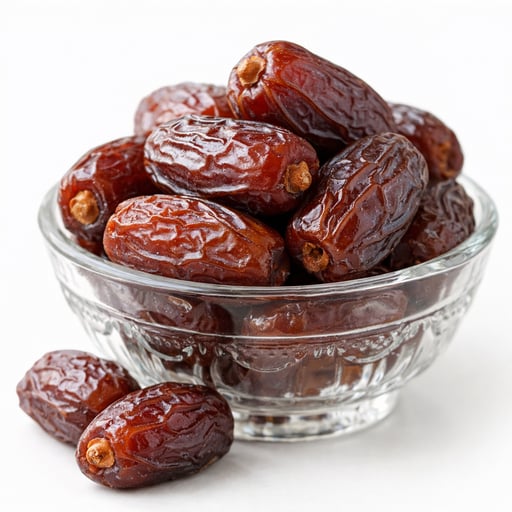
Medjool dates
खजूर, मेडजूल
Phoenix dactylifera
Medjool dates are sweet, soft dried fruits commonly eaten as snacks or used in desserts. They provide significant dietary fiber and copper.
Nutrition per 100g
Nutrient Breakdown
Key Nutrients(13)
% DV = % Daily Value (adult RDA, ICMR 2020). Values per 100g edible portion.
Use Medjool dates in meal plans
17,000+ foods with real-time nutrient tracking, AI generation, and WhatsApp sharing.
Start FreeFree plan · No credit card
Common questions about Medjool dates
How many calories are in date, pitted of Medjool dates?
date, pitted (24 g) of Medjool dates has about 66 kcal, based on 277 kcal per 100 g.
How much protein is in Medjool dates?
Medjool dates provides about 1.8 g of protein per 100 g.
How much sugar does Medjool dates contain?
Medjool dates has about 66.5 g of total sugars per 100 g.
How are Medjool dates commonly used in cooking?
They are eaten as snacks, used in desserts, or added to energy bars and sweets for natural sweetness and texture.
Are Medjool dates suitable for a vegan diet?
Yes, Medjool dates are completely plant-based and suitable for vegan diets.
How should Medjool dates be stored to maintain freshness?
Store them in an airtight container in a cool, dry place. Refrigeration is recommended to extend shelf life.
About Medjool dates
Medjool dates are a popular variety of dates known for their large size, soft texture, and rich sweetness. Widely cultivated in warm climates, they are often consumed as a natural sweetener or energy-rich snack.
They provide significant amounts of dietary fiber, which supports digestion, and are rich in copper, a trace mineral important for metabolic functions.
Medjool dates are vegan and naturally free of common allergens. They are used widely in Indian households for making sweets, energy bites, or eaten directly as a nutritious snack.
- High in dietary fiber
- Significant copper content
- Naturally vegan and gluten-free
Values per 100g edible portion.
Nutrition data is for reference only. Values may vary by preparation method, brand, and region. Full disclaimer
Similar foods
Browse all →Dates, deglet noor
Seeded raisins
Raw jujube
Raw mulberries
Raisins, golden, seedless
गोल्डन किशमिश (बीज रहित)
Raw loquats
Raw figs
Raw apricots
खुबानी (कच्ची)