


 by Workfile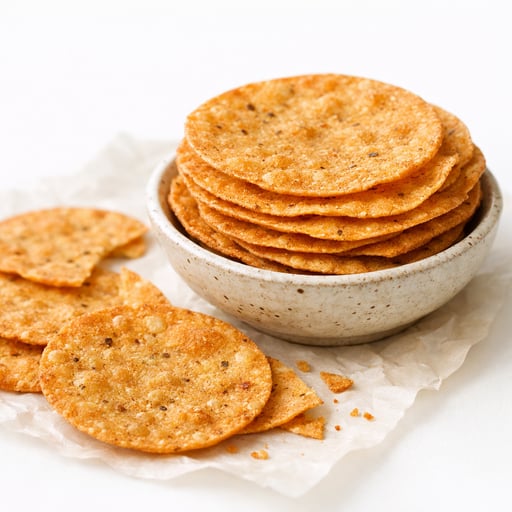
Khakhra
Also known as: Khakra
Khakhra is a popular crispy Indian snack made from roasted whole wheat flour with spices, often enjoyed with pickles or chutney.
Nutrition per 100g
Nutrient Breakdown
Key Nutrients(18)
% DV = % Daily Value (adult RDA, ICMR 2020). Values per 100g edible portion.
Use Khakhra in meal plans
17,000+ foods with real-time nutrient tracking, AI generation, and WhatsApp sharing.
Start FreeFree plan · No credit card
Common questions about Khakhra
How many calories are in 1 khakhra of Khakhra?
1 khakhra (76 g) of Khakhra has about 136 kcal, based on 178 kcal per 100 g.
How much protein is in Khakhra?
Khakhra provides about 4.8 g of protein per 100 g.
How much sugar does Khakhra contain?
Khakhra has about 0.9 g of total sugars per 100 g.
What meals is Khakhra suitable for?
Khakhra is typically consumed as a snack, during mid-morning or evening tea times.
Is Khakhra vegetarian?
Yes, Khakhra is a vegetarian snack made mainly from whole wheat flour and spices.
How should Khakhra be stored?
Store Khakhra in an airtight container at room temperature to maintain its crispness and prevent moisture absorption.
About Khakhra
Khakhra is a traditional Indian snack originating from Gujarat, made primarily from whole wheat flour, which is rolled thin and roasted until crisp. It is typically spiced lightly with ingredients like cumin, chili powder, or turmeric and consumed as a healthy snack or breakfast accompaniment.
- It is high in selenium and manganese, essential minerals that serve various biological functions.
- Contains a good source of fiber, which aids digestion.
- Also provides vitamin E and copper, important for antioxidant activities.
This snack is vegetarian and free from common allergens like dairy or nuts, making it suitable for most diets. Its preparation involves roasting rather than deep frying, contributing to its relatively low fat content compared to other fried snacks.
Values per 100g edible portion.
Nutrition data is for reference only. Values may vary by preparation method, brand, and region. Full disclaimer
Contains data from Indian Nutrient Databank (INDB), University of Edinburgh, licensed under CC BY 4.0, modified for presentation.
Report a data issueSimilar foods
Browse all →
Khakhra chaat
Khaman
Khasta kachori
Dhokla
ढोकला
Dahi vadas/Dahi bhalla
Papdi
पापड़ी
Spicy corn chaat
Shammi kebab