


 by Workfile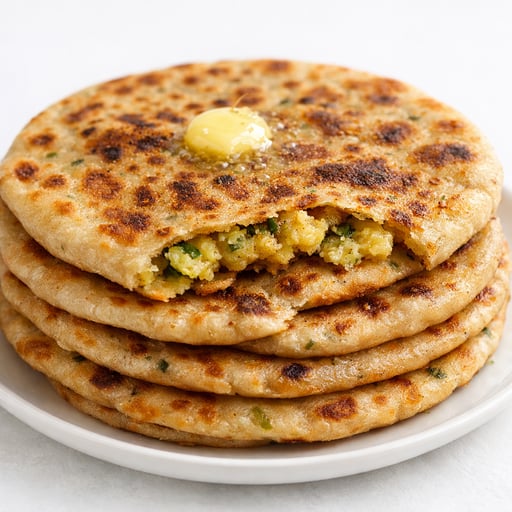
Potato parantha/paratha
Also known as: Potato Parantha, Aloo ka parantha/paratha
A popular Indian flatbread made with whole wheat flour and filled with spiced potato filling, often served hot with yogurt or pickles.
Nutrition per 100g
Nutrient Breakdown
Key Nutrients(16)
% DV = % Daily Value (adult RDA, ICMR 2020). Values per 100g edible portion.
Use Potato parantha/paratha in meal plans
17,000+ foods with real-time nutrient tracking, AI generation, and WhatsApp sharing.
Start FreeFree plan · No credit card
Common questions about Potato parantha/paratha
How many calories are in 1 parantha of Potato parantha/paratha?
1 parantha (93 g) of Potato parantha/paratha has about 191 kcal, based on 205 kcal per 100 g.
How much protein is in Potato parantha/paratha?
Potato parantha/paratha provides about 3.7 g of protein per 100 g.
How much sugar does Potato parantha/paratha contain?
Potato parantha/paratha has about 1.2 g of total sugars per 100 g.
Is potato parantha suitable for vegetarians?
Yes, potato parantha is a vegetarian dish made without any meat or eggs.
What are common ways to eat potato parantha?
It is often eaten with yogurt, pickles, or chutneys as a part of breakfast or lunch.
Can potato parantha contain allergens?
Yes, it contains gluten from wheat flour, which can be an allergen for some individuals.
About Potato parantha/paratha
Potato Paratha is a staple Indian flatbread, particularly popular in North India. Made from whole wheat flour, it is stuffed with a spiced potato filling that often includes spices like cumin, coriander, and garam masala. These flatbreads are commonly served with yogurt, achaar (pickle), or butter, making them a delightful part of breakfast or a snack.
Nutritionally, potato parathas provide a good balance of carbohydrates and fats and can be a source of dietary fiber. They are rich in energy, which makes them an excellent option for a hearty meal or after an active day. However, one should consume them in moderation, especially those monitoring their carbohydrate intake, as they can be higher in calories due to the oil or ghee used in cooking.
- Common Meal Times: Suitable for breakfast, a midday snack, or dinner.
- Allergens: Contains gluten due to wheat flour. They are vegetarian-friendly but may be high in fat based on preparation methods.
Values per 100g edible portion.
Nutrition data is for reference only. Values may vary by preparation method, brand, and region. Full disclaimer
Contains data from Indian Nutrient Databank (INDB), University of Edinburgh, licensed under CC BY 4.0, modified for presentation.
Report a data issueSimilar foods
Browse all →Plain parantha/paratha
Pea parantha/paratha
Paneer parantha/paratha
Dal parantha/paratha
Tandoori parantha/paratha
Radish parantha/paratha
Cauliflower parantha/paratha
Keema parantha/paratha