

 by Workfile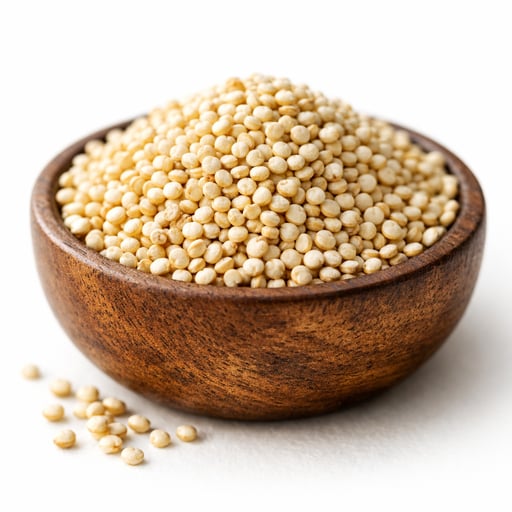
Quinoa
क्विनोआ
Chenopodium quinoa
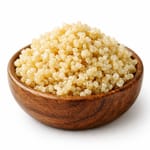
Quinoa is a nutritious grain known for its protein content and gluten-free nature. It is often used in salads, bowls, and as a side dish in various cuisines.
Nutrition per 100g
Nutrient Breakdown
Key Nutrients(17)
% DV = % Daily Value (adult RDA, ICMR 2020). Values per 100g edible portion.
Use Quinoa in meal plans
17,000+ foods with real-time nutrient tracking, AI generation, and WhatsApp sharing.
Start FreeFree plan · No credit card
Common questions about Quinoa
How many calories are in 1 katori cooked of Quinoa?
1 katori cooked (150 g) of Quinoa has about 493 kcal, based on 328 kcal per 100 g.
How much protein is in Quinoa?
Quinoa provides about 13.1 g of protein per 100 g.
How much sugar does Quinoa contain?
Quinoa has about 1.4 g of total sugars per 100 g.
How is quinoa generally used in cooking?
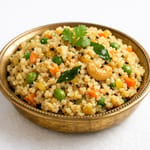
Quinoa is usually cooked by boiling and can be used as a base for salads, mixed with vegetables, or served similar to rice.
Is quinoa suitable for vegan diets?
Yes, quinoa is a plant-based food and is suitable for vegan and vegetarian diets.
How should quinoa be stored?
Quinoa should be stored in an airtight container in a cool, dry place to maintain freshness and prevent moisture absorption.
About Quinoa
Quinoa, a seed that is often considered a grain, originates from the Andean region of South America. It has gained immense popularity worldwide due to its nutritional richness and versatility. Typically cooked and served as a side dish, quinoa can also be added to salads, soups, or eaten as a breakfast porridge.
Quinoa is particularly celebrated for its protein content, being a complete protein with all nine essential amino acids. In addition, it offers a good amount of fiber, vitamins, and minerals, making it an excellent option for people seeking gluten-free grains or those on a vegan diet. It can be enjoyed during all meal times—from breakfast to dinner—and serves as a great substitute for rice or couscous.
Being low in glycemic index, it's suitable for diabetic individuals, while its rich nutrient profile supports overall health. Common meal formats include quinoa bowls, salads, and as a versatile ingredient in various dishes.
Values per 100g edible portion.
Nutrition data is for reference only. Values may vary by preparation method, brand, and region. Full disclaimer