Advertisement
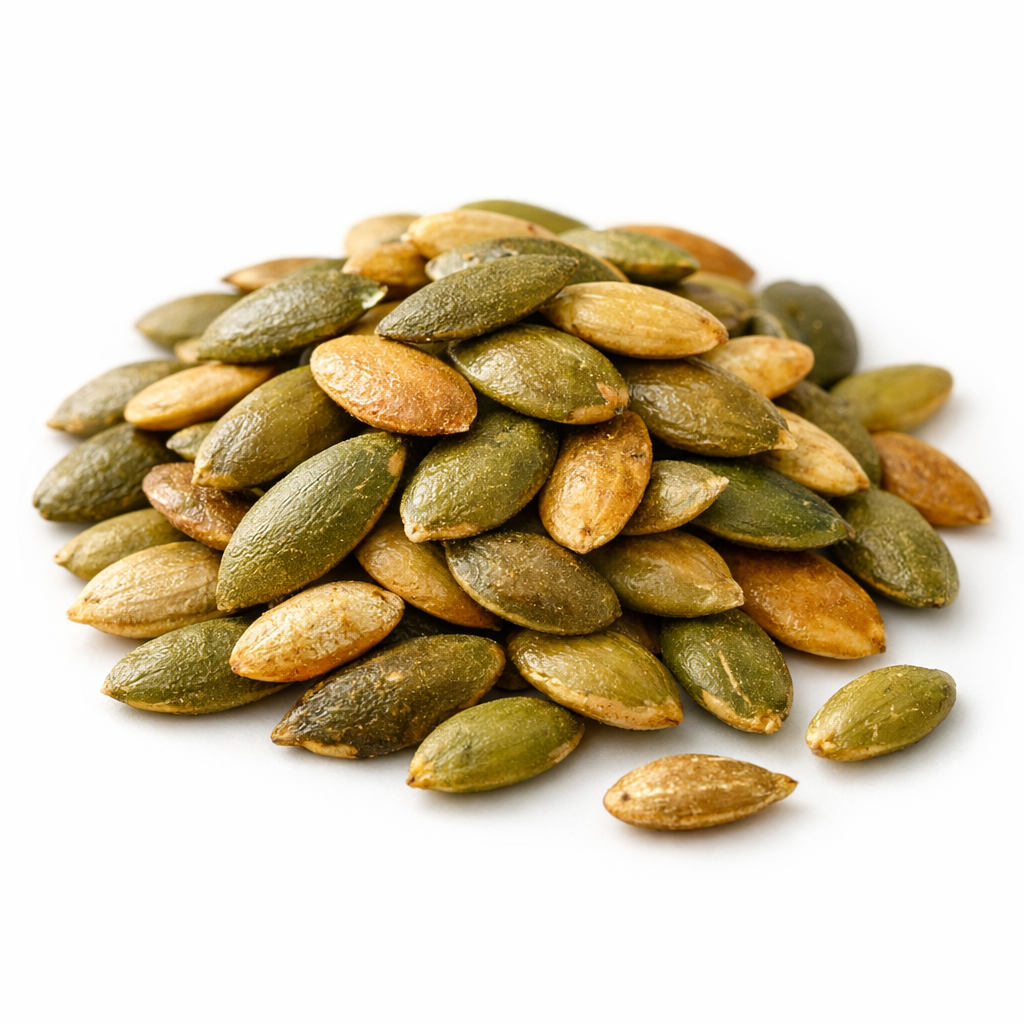
Seeds, pumpkin and squash seeds, whole, roasted, without salt
Illustration

Seeds, pumpkin and squash seeds, whole, roasted, without salt

कद्दू और तद्दू के बीज, पूरे, भुने हुए, बिना नमक के

Cucurbita spp.

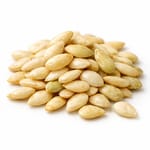
Whole roasted pumpkin and squash seeds without salt are nutrient-dense seeds commonly eaten as snacks or used in cooking and baking.

VegetarianHigh calorie densityNOVA 1· Unprocessed
446
kcal
18.6
Protein
53.8
Carbs
19.4
Fat
18.4
Fiber
per 100g
High in zincHigh in magnesiumGood source of fibre
Nut and Seed Products·Mid Morning, Evening Snack
Serving Size= 100g

Nutrition per 100g

Protein19g(16%)
Carbs54g(46%)
Fat19g(38%)
Fiber18g
Advertisement
Advertisement

Use Seeds, pumpkin and squash seeds, whole, roasted, without salt in meal plans

17,000+ foods with real-time nutrient tracking, AI generation, and WhatsApp sharing.

Start Free

Free plan · No credit card

Common questions about Seeds, pumpkin and squash seeds, whole, roasted, without salt

How many calories are in cup of Seeds, pumpkin and squash seeds, whole, roasted, without salt?

cup (64 g) of Seeds, pumpkin and squash seeds, whole, roasted, without salt has about 285 kcal, based on 446 kcal per 100 g.

How much protein is in Seeds, pumpkin and squash seeds, whole, roasted, without salt?

Seeds, pumpkin and squash seeds, whole, roasted, without salt provides about 18.6 g of protein per 100 g.

How are roasted pumpkin seeds commonly used in cooking?

They are eaten as snacks, added to salads, mixed into trail mixes, or used as crunchy toppings for dishes and baked goods.

Are these seeds suitable for vegan diets?

Yes, roasted pumpkin and squash seeds are entirely plant-based and suitable for vegan diets.

How should roasted pumpkin seeds be stored to keep fresh?

Store them in an airtight container in a cool, dry place away from direct sunlight to maintain freshness and crispness.

About Seeds, pumpkin and squash seeds, whole, roasted, without salt

Pumpkin and squash seeds, also known as pepitas, are the edible seeds from pumpkins and other squash varieties. Roasting these seeds without salt enhances their nutty flavor and makes for a crunchy snack popular in many cuisines, including Indian households.

  • They are rich in zinc, magnesium, dietary fiber, copper, and protein, which contribute to overall nutritional quality.
  • The seeds provide significant potassium and are an excellent plant-based source of minerals.
  • Being vegan and naturally gluten-free, they fit well in many diets.

These seeds can be eaten raw or roasted, added to salads, trail mixes, baked goods, or used as a crunchy topping.

Advertisement
SourceUSDA SR Legacy

Values per 100g edible portion.

Nutrition data is for reference only. Values may vary by preparation method, brand, and region. Full disclaimer

Report a data issue
Advertisement
Back to Food Database