


 by Workfile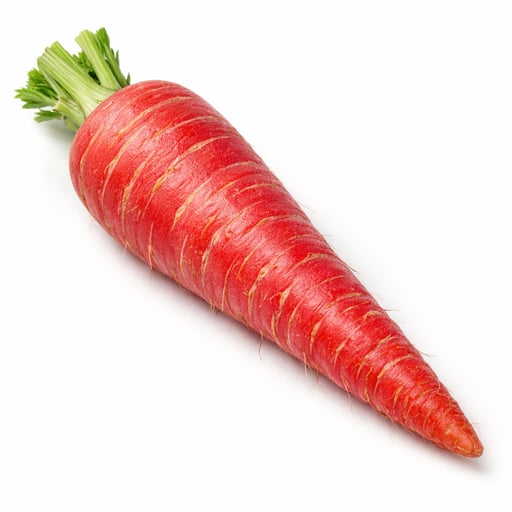
Red carrot
Gajar
Dacus carota
Also known as: Gajor, Gajjare, Ghahzir, Kajor, Carrot, Gajara
Red carrot is a crunchy root vegetable commonly eaten raw or cooked in Indian cuisine, known for its sweet flavor and vibrant color.
Nutrition per 100g
Nutrient Breakdown
Key Nutrients(14)
% DV = % Daily Value (adult RDA, ICMR 2020). Values per 100g edible portion.
Use Red carrot in meal plans
17,000+ foods with real-time nutrient tracking, AI generation, and WhatsApp sharing.
Start FreeFree plan · No credit card
Common questions about Red carrot
How many calories are in 1 medium potato of Red carrot?
1 medium potato (80 g) of Red carrot has about 31 kcal, based on 38 kcal per 100 g.
How much protein is in Red carrot?
Red carrot provides about 1 g of protein per 100 g.
How much sugar does Red carrot contain?
Red carrot has about 4 g of total sugars per 100 g.
How is red carrot commonly used in Indian cooking?
Red carrot is commonly eaten raw in salads, juiced, or cooked in dishes like carrot halwa and various vegetable curries.
Is red carrot suitable for vegan diets?
Yes, red carrot is a plant-based food suitable for vegan and vegetarian diets.
How should red carrots be stored for best freshness?
Red carrots should be stored in the refrigerator, ideally in a plastic bag or container to maintain moisture and freshness.
About Red carrot
Carrot, red, is a widely consumed root vegetable popular in India and around the world. It is typically eaten raw in salads, juiced, or cooked in various dishes. The carrot is valued for its sweet taste and crisp texture.
Although carrots are often recognized for their vitamin A content, based on the provided data, this red carrot is notably a good source of Vitamin K, providing 34% of the daily value per 100g. It also contains small amounts of essential minerals like potassium and calcium.
- Commonly prepared raw as a salad ingredient or snack.
- Used in Indian dishes like carrot halwa and vegetable mixes.
- Suitable for vegan diets and free from common allergens.
This food is versatile and forms an important part of healthy eating patterns, contributing to varied nutrient intake.
Values per 100g edible portion.
Nutrition data is for reference only. Values may vary by preparation method, brand, and region. Full disclaimer
Similar foods
Browse all →Orange carrot
Gajar
Carrot cake
Carrot halwa
Beet root
Chukandar
Jhatpat achar with carrot
Carrot raita
Carrot murabba
Bitter gourd, jagged, teeth ridges, elongate
Karela