

 by Workfile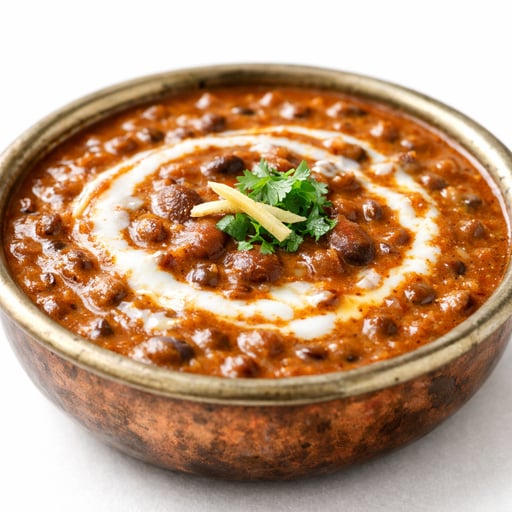
Dal makhani
दाल मखनी
Dal Makhani is a rich and creamy North Indian lentil dish made with whole black gram (urad dal) and kidney beans, simmered with butter, cream, and spices.
Nutrition per 100g
Nutrient Breakdown
Key Nutrients(15)
% DV = % Daily Value (adult RDA, ICMR 2020). Values per 100g edible portion.
Use Dal makhani in meal plans
17,000+ foods with real-time nutrient tracking, AI generation, and WhatsApp sharing.
Start FreeFree plan · No credit card
Common questions about Dal makhani
How many calories are in 1 bowl of Dal makhani?
1 bowl (353 g) of Dal makhani has about 261 kcal, based on 74 kcal per 100 g.
How much protein is in Dal makhani?
Dal makhani provides about 3.3 g of protein per 100 g.
How much sugar does Dal makhani contain?
Dal makhani has about 0.8 g of total sugars per 100 g.
Is Dal Makhani a vegetarian dish?
Yes, Dal Makhani is vegetarian, made primarily from lentils, beans, dairy, and spices with no meat or eggs.
What are common ways to serve Dal Makhani?
Dal Makhani is commonly served hot with Indian breads like naan or roti, or with steamed rice.
Does Dal Makhani contain any allergens?
Yes, Dal Makhani typically contains dairy (butter and cream), which is a common allergen.
About Dal makhani
Dal Makhani is a popular and traditional dish from North India, especially Punjab. It combines whole black gram lentils and kidney beans slow-cooked with spices, butter, and cream for a creamy texture and rich taste.
This dish is usually enjoyed with naan, roti, or rice and is a staple in many Indian households and restaurants.
- Made mostly from lentils and beans, providing good plant-based protein.
- Contains 20% Daily Value of manganese per 100g, an essential mineral.
- Although rich and creamy, it contains moderate fat and moderate calories.
Dal Makhani is vegetarian and suitable for lacto-vegetarian diets but not vegan due to dairy ingredients. It is commonly eaten at lunch and dinner meals.
Values per 100g edible portion.
Nutrition data is for reference only. Values may vary by preparation method, brand, and region. Full disclaimer
Contains data from Indian Nutrient Databank (INDB), University of Edinburgh, licensed under CC BY 4.0, modified for presentation.
Report a data issue