


 by Workfile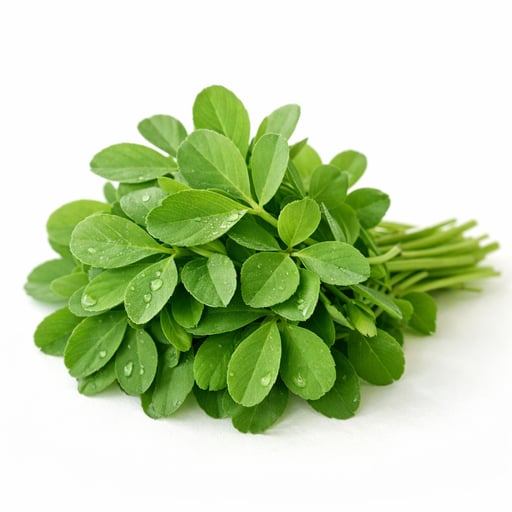
Fenugreek leaves
Methi sag
Trigonella foenum-graecum
Also known as: Methi paat, Methi shak, Methi pandada, Menthya soppu, Kasori Methi, Sla methi
Fenugreek leaves are commonly used fresh herbs in Indian cooking, known for their aromatic and slightly bitter flavor. They provide significant amounts of vitamin K, chromium, vitamin C, folate, and iron.
Nutrition per 100g
Nutrient Breakdown
Key Nutrients(18)
% DV = % Daily Value (adult RDA, ICMR 2020). Values per 100g edible portion.
Use Fenugreek leaves in meal plans
17,000+ foods with real-time nutrient tracking, AI generation, and WhatsApp sharing.
Start FreeFree plan · No credit card
Common questions about Fenugreek leaves
How many calories are in 1 katori cooked of Fenugreek leaves?
1 katori cooked (100 g) of Fenugreek leaves has about 34 kcal, based on 34 kcal per 100 g.
How much protein is in Fenugreek leaves?
Fenugreek leaves provides about 3.7 g of protein per 100 g.
How much sugar does Fenugreek leaves contain?
Fenugreek leaves has about 0.9 g of total sugars per 100 g.
How are fenugreek leaves commonly used in Indian cooking?
Fenugreek leaves are often sautéed with spices, added to dals, used in parathas, or mixed in vegetable dishes to add flavor and nutrition.
What dietary type does fenugreek leaves fall under?
Fenugreek leaves are vegan and free from animal products, suitable for vegetarian and vegan diets.
How should fenugreek leaves be stored for freshness?
Store fenugreek leaves refrigerated in a perforated plastic bag to maintain freshness for up to 3-4 days.
About Fenugreek leaves
Fenugreek leaves, known as 'methi ke patte' in Hindi, are widely used as a fresh leafy vegetable and herb in Indian cuisine. They have a distinctive slightly bitter taste and are commonly added to dals, sabzis, parathas, and curries.
They are rich in vitamin K, which plays a crucial role in blood clotting, and contain significant levels of chromium, vitamin C, folate (B9), and iron. This nutrient profile makes fenugreek leaves a valuable addition to a balanced diet.
Fenugreek leaves are vegan and free from common allergens, making them suitable for most dietary preferences. They can be consumed raw in salads or cooked to reduce bitterness and enhance flavor.
- Rich in vitamin K
- Provides chromium and vitamin C
- Contains folate and iron
Fenugreek leaves have a low glycemic impact and can be included in various meals throughout the day.
Values per 100g edible portion.
Nutrition data is for reference only. Values may vary by preparation method, brand, and region. Full disclaimer
Similar foods
Browse all →
Fenugreek seeds
Methi
Carrot and fenugreek leaves
Drumstick leaves
Saijan patta
Raw fenugreek leaves
Potato fenugreek
Green amaranth leaves
Chaulai
Parsley
Green gogu leaves
Pitwa