


 by Workfile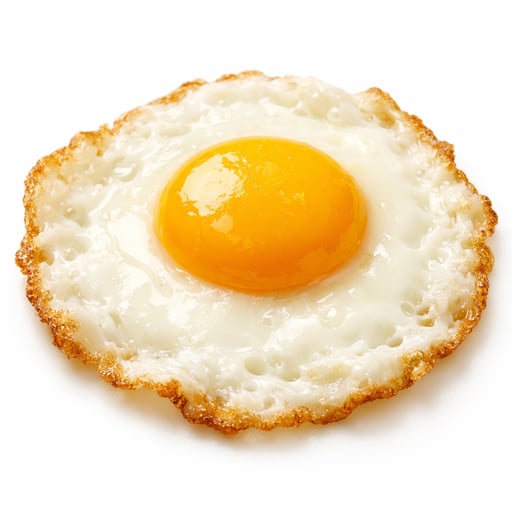
Fried Egg
Also known as: Fried Egg
Fried egg is an egg cooked by frying on a pan, often in oil or butter, popular for breakfast and snacks.
Nutrition per 100g
Nutrient Breakdown
Key Nutrients(18)
% DV = % Daily Value (adult RDA, ICMR 2020). Values per 100g edible portion.
Use Fried Egg in meal plans
17,000+ foods with real-time nutrient tracking, AI generation, and WhatsApp sharing.
Start FreeFree plan · No credit card
Common questions about Fried Egg
How many calories are in 1 egg of Fried Egg?
1 egg (58 g) of Fried Egg has about 130 kcal, based on 224 kcal per 100 g.
How much protein is in Fried Egg?
Fried Egg provides about 11.6 g of protein per 100 g.
How much sugar does Fried Egg contain?
Fried Egg has about 0 g of total sugars per 100 g.
How is a fried egg commonly used in Indian meals?
Fried eggs are commonly eaten as a breakfast item or snack, often with bread, roti, or rice.
Is fried egg suitable for vegetarian diets?
Fried egg is classified as egg dietary type, so it is suitable for ovo-vegetarians but not for vegans.
What is the best way to store eggs before frying?
Keep eggs refrigerated and consume before the expiration date for best quality and safety.
About Fried Egg
Fried egg is a commonly consumed cooked egg dish where the egg is cracked and fried on a hot pan, usually with some oil or butter. It is a popular breakfast and snack item in many cuisines, including Indian households.
Fried eggs are high in protein, and they provide significant amounts of vitamin E, selenium, and biotin (vitamin B7). They also supply useful levels of pantothenic acid (B5), phosphorus, sodium, and vitamin A.
As an animal product, fried eggs are classified as "egg" dietary type. They do not contain carbohydrates or fiber but are rich in protein and fats from the yolk and cooking oil. Due to the frying process, fat content is higher than raw or boiled eggs.
- Commonly eaten for breakfast or snacks.
- Contains common egg allergens.
- Suitable for inclusion in a balanced diet unless allergic.
Values per 100g edible portion.
Nutrition data is for reference only. Values may vary by preparation method, brand, and region. Full disclaimer
Contains data from Indian Nutrient Databank (INDB), University of Edinburgh, licensed under CC BY 4.0, modified for presentation.
Report a data issueSimilar foods
Browse all →Baked egg
Poached egg
Egg sauce
Deviled egg
Egg, whole, cooked, fried
Scotch egg
Stuffed egg omelette/omlet
Boiled egg