


 by Workfile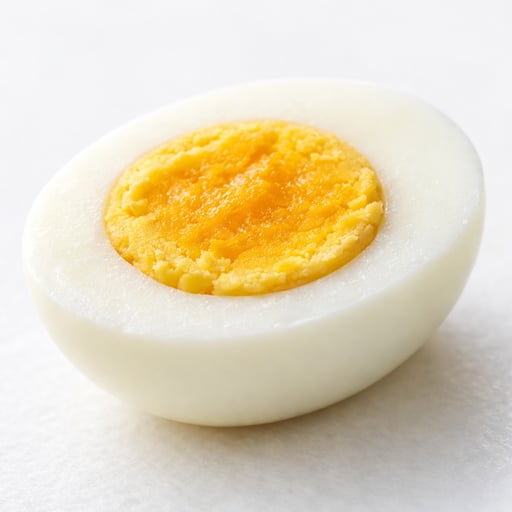
Boiled egg
Also known as: Boiled Egg, Ubla anda
Boiled eggs are a nutritious and versatile food, rich in protein and essential vitamins, making them a popular choice for meals and snacks.
Nutrition per 100g
Nutrient Breakdown
Key Nutrients(15)
% DV = % Daily Value (adult RDA, ICMR 2020). Values per 100g edible portion.
Use Boiled egg in meal plans
17,000+ foods with real-time nutrient tracking, AI generation, and WhatsApp sharing.
Start FreeFree plan · No credit card
Common questions about Boiled egg
How many calories are in 1 egg of Boiled egg?
1 egg (151 g) of Boiled egg has about 68 kcal, based on 45 kcal per 100 g.
How much protein is in Boiled egg?
Boiled egg provides about 4.4 g of protein per 100 g.
How much sugar does Boiled egg contain?
Boiled egg has about 0 g of total sugars per 100 g.
What is the typical use of boiled eggs in Indian meals?
Boiled eggs are commonly eaten as snacks, added to salads, or served alongside main dishes for breakfast and dinner.
Is boiled egg considered vegetarian or non-vegetarian?
Boiled egg is classified as egg dietary type and considered non-vegetarian.
How should boiled eggs be stored?
Boiled eggs can be stored refrigerated for up to one week to maintain freshness and safety.
About Boiled egg
Boiled eggs are eggs that have been cooked in their shells in boiling water. This method ensures that the whites and yolks are firm yet tender, making them a popular choice for a snack or addition to salads and sandwiches.
Nutritional Powerhouse: Boiled eggs are rich in protein, healthy fats, and key vitamins such as vitamin A, D, and B12. They are a great source of folate and minerals like calcium and iron.
Dietary Benefits: Being naturally low in carbohydrates, boiled eggs are suitable for low-carb diets and provide essential nutrients without excess calories. They can be enjoyed at breakfast, as a mid-morning snack, or even as a part of a meal.
- High in protein
- A good source of omega-3 fatty acids
- Versatile and easy to prepare
Values per 100g edible portion.
Nutrition data is for reference only. Values may vary by preparation method, brand, and region. Full disclaimer
Contains data from Indian Nutrient Databank (INDB), University of Edinburgh, licensed under CC BY 4.0, modified for presentation.
Report a data issueSimilar foods
Browse all →
Poached egg

Fried Egg
Scrambled egg
Baked egg
Egg curry
Egg, poultry, white, boiled
Deviled egg
Egg, whole, cooked, hard-boiled