


 by Workfile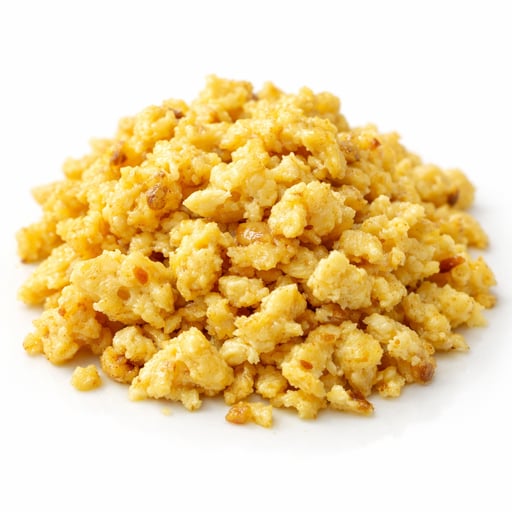
Scrambled egg
Also known as: Scrambled Egg, Ande ki bhurji
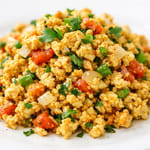
A quick and easy breakfast dish made by whisking eggs and cooking them until soft and fluffy. Perfect for any meal of the day.
Nutrition per 100g
Nutrient Breakdown
Key Nutrients(18)
% DV = % Daily Value (adult RDA, ICMR 2020). Values per 100g edible portion.
Use Scrambled egg in meal plans
17,000+ foods with real-time nutrient tracking, AI generation, and WhatsApp sharing.
Start FreeFree plan · No credit card
Common questions about Scrambled egg
How many calories are in 1 egg of Scrambled egg?
1 egg (70 g) of Scrambled egg has about 109 kcal, based on 156 kcal per 100 g.
How much protein is in Scrambled egg?
Scrambled egg provides about 10.3 g of protein per 100 g.
How much sugar does Scrambled egg contain?
Scrambled egg has about 1.1 g of total sugars per 100 g.
How is scrambled egg typically prepared in Indian households?
Eggs are beaten and pan-fried with a small amount of oil or ghee, often seasoned with spices like turmeric, chili, and onions.
Is scrambled egg suitable for vegetarians?
No, scrambled egg contains egg and is classified as 'egg' dietary type, not vegetarian.
How should I store scrambled egg?
Cooked scrambled eggs should be refrigerated and consumed within 1-2 days for safety and freshness.
About Scrambled egg
Scrambled eggs are a simple yet delicious dish that is enjoyed worldwide. They are typically made by whisking eggs and cooking them over low heat while stirring frequently, resulting in a creamy texture. In Indian cuisine, scrambled eggs are often prepared with spices and vegetables, known as 'अंडा भुर्जी', making them a flavorful breakfast option.
- Rich in high-quality protein, scrambled eggs provide essential amino acids.
- They are also a good source of vitamin A, which supports vision and immune function.
This dish is suitable for various meal slots, primarily breakfast and evening snacks. Due to the presence of eggs, it is an excellent choice for non-vegetarians looking for a protein-rich meal. However, those with egg allergies should avoid this dish.
Values per 100g edible portion.
Nutrition data is for reference only. Values may vary by preparation method, brand, and region. Full disclaimer
Contains data from Indian Nutrient Databank (INDB), University of Edinburgh, licensed under CC BY 4.0, modified for presentation.
Report a data issueSimilar foods
Browse all →
Egg sandwich
Spinach mushroom scrambled egg
Egg Scrambled
Egg, whole, cooked, scrambled
Egg and tomato sandwich
Poached egg
Egg Bhurji
अंडा भुर्जी
Indian style egg bhujia (Anda bhujia (Indian style))