


 by Workfile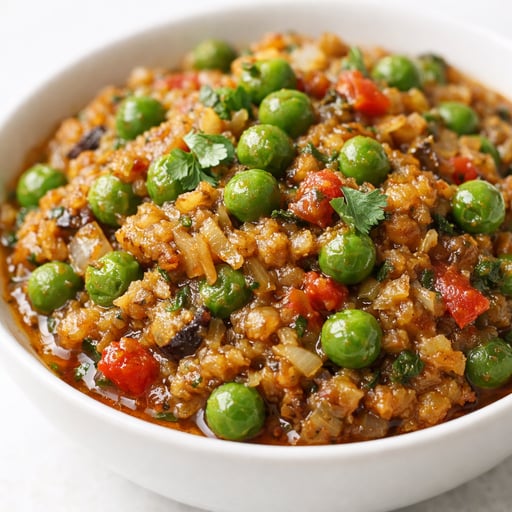
Peas brinjal bhartha
Also known as: MATAR BAINGAN BHARTA, Matar baingan bhartha
Peas Brinjal Bhartha is a cooked Indian vegetable mash made from mashed brinjal (eggplant) and green peas, seasoned with typical Indian spices. It is usually eaten as a side dish with roti or rice.
Nutrition per 100g
Nutrient Breakdown
Key Nutrients(15)
% DV = % Daily Value (adult RDA, ICMR 2020). Values per 100g edible portion.
Use Peas brinjal bhartha in meal plans
17,000+ foods with real-time nutrient tracking, AI generation, and WhatsApp sharing.
Start FreeFree plan · No credit card
Common questions about Peas brinjal bhartha
How many calories are in 1 small bowl of Peas brinjal bhartha?
1 small bowl (262 g) of Peas brinjal bhartha has about 222 kcal, based on 85 kcal per 100 g.
How much protein is in Peas brinjal bhartha?
Peas brinjal bhartha provides about 2.1 g of protein per 100 g.
How much sugar does Peas brinjal bhartha contain?
Peas brinjal bhartha has about 1.6 g of total sugars per 100 g.
Is Peas Brinjal Bhartha suitable for vegetarians?
Yes, Peas Brinjal Bhartha is a vegetarian dish made from vegetables and spices.
How is Peas Brinjal Bhartha typically eaten?
It is commonly served as a side dish with Indian breads like roti or with rice.
What is the shelf life of homemade Peas Brinjal Bhartha?
When stored in a refrigerator, it can be safely consumed within 2-3 days.
About Peas brinjal bhartha
Peas Brinjal Bhartha is a traditional Indian dish combining roasted or boiled eggplant (brinjal) and green peas into a spiced mash, often prepared with onions, tomatoes, and a blend of spices. Originating from regional home cooking styles, this dish serves as a flavorful accompaniment to staple foods like chapati or rice.
- Nutritionally, it provides a moderate amount of calories primarily from carbohydrates and a small amount of protein and fat.
- It is notable for its content of Vitamin E and Vitamin K, important fat-soluble vitamins involved in antioxidant function and blood clotting.
- This dish is vegetarian and can be prepared without dairy or animal products, making it suitable for lacto-vegetarian diets.
- Its fiber content contributes to digestive health and the mix of spices adds to its characteristic aroma and taste.
Values per 100g edible portion.
Nutrition data is for reference only. Values may vary by preparation method, brand, and region. Full disclaimer
Contains data from Indian Nutrient Databank (INDB), University of Edinburgh, licensed under CC BY 4.0, modified for presentation.
Report a data issueSimilar foods
Browse all →
Brinjal bhartha
Stuffed brinjal
Pea curry
Cabbage and peas
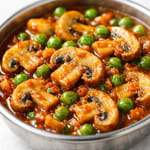
Mushroom matar
Pea mushroom curry
Pea potato curry
Brinjal pickle