


 by Workfile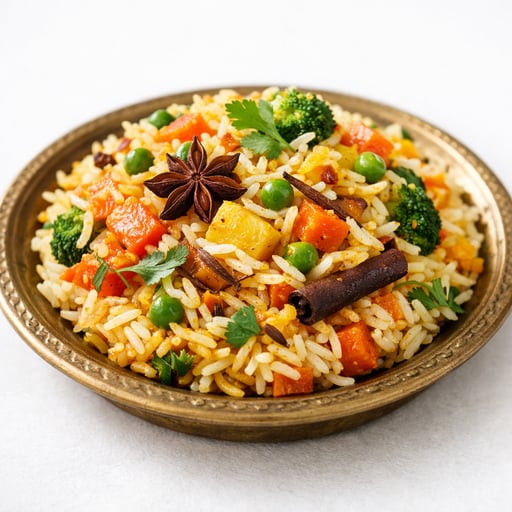
Vegetable biryani/biriyani
Also known as: Vegetable Biryani
Vegetable Biryani is a spiced rice dish cooked with assorted vegetables and aromatic spices, popular in Indian cuisine. It is usually served as a main meal and provides a moderate source of Vitamin E, Vitamin K, and Vitamin C.
Nutrition per 100g
Nutrient Breakdown
Key Nutrients(16)
% DV = % Daily Value (adult RDA, ICMR 2020). Values per 100g edible portion.
Use Vegetable biryani/biriyani in meal plans
17,000+ foods with real-time nutrient tracking, AI generation, and WhatsApp sharing.
Start FreeFree plan · No credit card
Common questions about Vegetable biryani/biriyani
How many calories are in 1 plate of Vegetable biryani/biriyani?
1 plate (302 g) of Vegetable biryani/biriyani has about 527 kcal, based on 175 kcal per 100 g.
How much protein is in Vegetable biryani/biriyani?
Vegetable biryani/biriyani provides about 3.2 g of protein per 100 g.
How much sugar does Vegetable biryani/biriyani contain?
Vegetable biryani/biriyani has about 2.1 g of total sugars per 100 g.
Is vegetable biryani suitable for vegetarians?
Yes, vegetable biryani is vegetarian as it contains rice, vegetables, and spices without meat or eggs.
Does vegetable biryani contain any common allergens?
Yes, it contains gluten due to the presence of rice and possible wheat-based ingredients like some spice mixes or added fried onions.
About Vegetable biryani/biriyani
Vegetable Biryani is a classic Indian flavorful dish consisting of basmati rice, mixed vegetables like carrots, beans, peas, and potatoes, and a blend of spices such as cardamom, cloves, and saffron. It is typically cooked using moderate amounts of oil and sometimes ghee, lending it a rich aroma and taste.
This dish is rich in Vitamin E, which acts as an antioxidant, and also provides significant amounts of Vitamin K and Vitamin C, essential for blood health and immune function respectively. It is a vegetarian dish that is suitable for many diets.
- Commonly eaten at lunch or dinner in many Indian households.
- Contains a balanced mix of carbohydrates, moderate protein from vegetables, and low fat.
- Contains some dietary fiber from vegetables, aiding digestion.
Vegetable Biryani is a flavorful and wholesome dish that combines taste with moderate nutrition, making it a popular choice for festive occasions and daily meals alike.
Values per 100g edible portion.
Nutrition data is for reference only. Values may vary by preparation method, brand, and region. Full disclaimer
Contains data from Indian Nutrient Databank (INDB), University of Edinburgh, licensed under CC BY 4.0, modified for presentation.
Report a data issueSimilar foods
Browse all →Mutton biryani/biriyani
Vegetable khichdi/khichri
Mixed vegetable pulao
Veg Biryani
Paneer pulao

Chicken pulao
Rice kheer
Mushroom pulao