


 by Workfile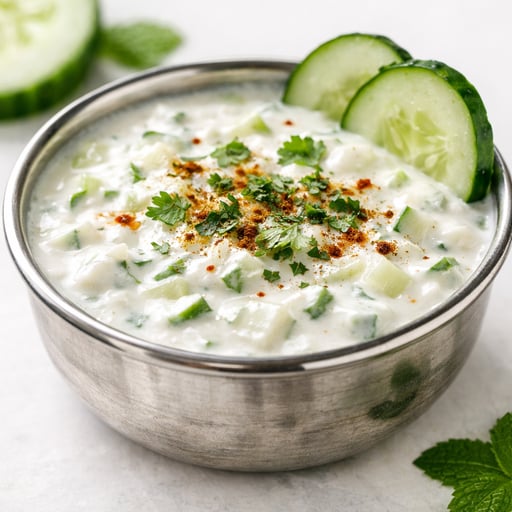
Cucumber raita
Also known as: Cucumber Raita, Kheere ka raita
A refreshing Indian side dish made from yogurt, grated cucumbers, and spices, perfect for balancing spicy meals.
Nutrition per 100g
Nutrient Breakdown
Key Nutrients(14)
% DV = % Daily Value (adult RDA, ICMR 2020). Values per 100g edible portion.
Use Cucumber raita in meal plans
17,000+ foods with real-time nutrient tracking, AI generation, and WhatsApp sharing.
Start FreeFree plan · No credit card
Common questions about Cucumber raita
How many calories are in 1 bowl of Cucumber raita?
1 bowl (153 g) of Cucumber raita has about 90 kcal, based on 59 kcal per 100 g.
How much protein is in Cucumber raita?
Cucumber raita provides about 4 g of protein per 100 g.
How much sugar does Cucumber raita contain?
Cucumber raita has about 5.2 g of total sugars per 100 g.
Is cucumber raita suitable for a vegetarian diet?
Yes, cucumber raita contains no meat, fish, or eggs and is suitable for vegetarians but not vegans due to the dairy content.
What are the typical ingredients in cucumber raita?
Main ingredients are yogurt (curd), cucumber, and commonly spices like cumin and salt.
How should cucumber raita be stored?
It should be kept refrigerated and consumed within 1-2 days for freshness.
About Cucumber raita
Cucumber Raita is a popular Indian side dish that combines fresh cucumbers with creamy yogurt and spices. It is often served with biryani or pulao, providing a cooling counterpart to spicy dishes. The dish not only enhances the flavor of the meal but also aids digestion due to the probiotic nature of yogurt.
- Nutritional Highlights:
- Rich in calcium and vitamin A.
- Low in calories and fat, making it a great choice for weight watchers.
- Dietary Notes: Suitable for vegetarians and can be adjusted to cater to various dietary restrictions, including lactose intolerance by using dairy substitutes.
Values per 100g edible portion.
Nutrition data is for reference only. Values may vary by preparation method, brand, and region. Full disclaimer
Contains data from Indian Nutrient Databank (INDB), University of Edinburgh, licensed under CC BY 4.0, modified for presentation.
Report a data issueSimilar foods
Browse all →
Cabbage raita
Cucumber sandwich
Cucumber and yogurt salad
Banana raita
Mango raita
Potato raita
Onion raita
Carrot raita