


 by Workfile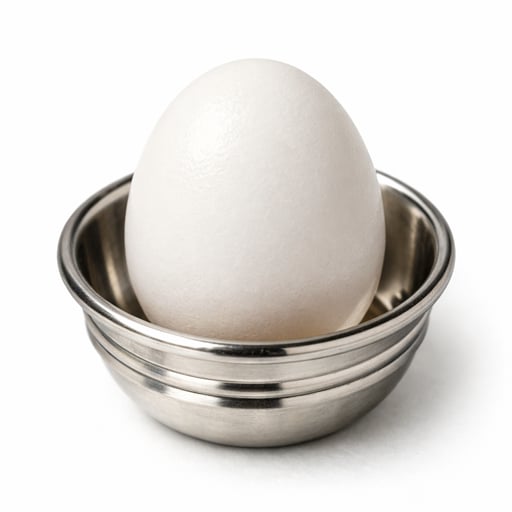
Egg, whole, raw, fresh
Also known as: 2c 41 1e 40
Raw whole egg including both white and yolk, commonly used in cooking and baking or eaten raw in some dishes.
Nutrition per 100g
Nutrient Breakdown
Key Nutrients(18)
% DV = % Daily Value (adult RDA, ICMR 2020). Values per 100g edible portion.
Use Egg, whole, raw, fresh in meal plans
17,000+ foods with real-time nutrient tracking, AI generation, and WhatsApp sharing.
Start FreeFree plan · No credit card
Common questions about Egg, whole, raw, fresh
How many calories are in cup (4.86 large eggs) of Egg, whole, raw, fresh?
cup (4.86 large eggs) (243 g) of Egg, whole, raw, fresh has about 347 kcal, based on 143 kcal per 100 g.
How much protein is in Egg, whole, raw, fresh?
Egg, whole, raw, fresh provides about 12.6 g of protein per 100 g.
How much sugar does Egg, whole, raw, fresh contain?
Egg, whole, raw, fresh has about 0.4 g of total sugars per 100 g.
How is raw egg commonly used in Indian cooking?
Raw eggs are used in various preparations such as omelets, egg curries, baking, and as a protein addition in many dishes.
Is egg considered a non-vegetarian food?
Yes, eggs are classified as egg dietary type, distinct from vegetarian and non-vegetarian categories which usually refer to meat and fish.
How should raw eggs be stored at home?
Raw eggs should be stored in a refrigerator to maintain freshness and reduce the risk of bacterial contamination.
About Egg, whole, raw, fresh
Eggs are a widely consumed animal food item, consisting of a protective eggshell with contents of egg white and yolk inside. They are a staple in various cuisines and provide a versatile source of protein and essential nutrients.
Raw whole eggs are typically used in recipes such as batters, mayonnaise, and some desserts, or consumed after cooking by boiling or frying.
This fresh egg possesses a moderate amount of calories primarily from fats and proteins, and contributes key nutrients including vitamin B12, folate, selenium, and choline. Eggs are considered an important nutrient-dense food in Indian and global diets.
- The protein in eggs is of high biological value.
- Raw eggs contain minimal carbohydrates and sugars.
- They do not provide vitamin C and contain negligible dietary fiber.
Eggs are suitable for egg diets and non-vegetarian diets but are excluded from vegetarian (lacto-vegetarian) and vegan diets.
Values per 100g edible portion.
Nutrition data is for reference only. Values may vary by preparation method, brand, and region. Full disclaimer
Similar foods
Browse all →
Egg, white, raw, fresh

Egg, duck, whole, fresh, raw

Egg, yolk, raw, fresh
Egg, whole, raw, frozen, pasteurized

Egg, quail, whole, fresh, raw

Egg, turkey, whole, fresh, raw

Egg, whole, raw, frozen, salted, pasteurized

Egg, goose, whole, fresh, raw