


 by Workfile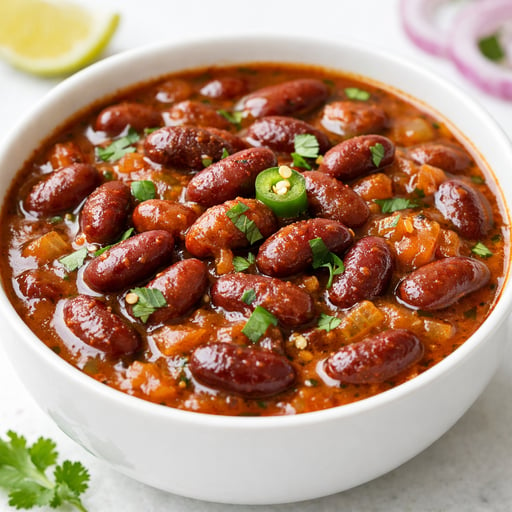
Kidney bean curry
Also known as: Rajmah curry
Kidney bean curry, known as 'Rajma' in India, is a popular vegetarian dish made by cooking red kidney beans in a spiced tomato-based sauce. It is commonly served with rice or roti and is cherished for its hearty taste and balanced nutrition.
Nutrition per 100g
Nutrient Breakdown
Key Nutrients(16)
% DV = % Daily Value (adult RDA, ICMR 2020). Values per 100g edible portion.
Use Kidney bean curry in meal plans
17,000+ foods with real-time nutrient tracking, AI generation, and WhatsApp sharing.
Start FreeFree plan · No credit card
Common questions about Kidney bean curry
How many calories are in 1 bowl of Kidney bean curry?
1 bowl (120 g) of Kidney bean curry has about 172 kcal, based on 144 kcal per 100 g.
How much protein is in Kidney bean curry?
Kidney bean curry provides about 6 g of protein per 100 g.
How much sugar does Kidney bean curry contain?
Kidney bean curry has about 2.5 g of total sugars per 100 g.
Is kidney bean curry suitable for a vegetarian diet?
Yes, kidney bean curry is vegetarian and generally vegan if made without dairy products.
How should kidney bean curry be stored?
Kidney bean curry should be refrigerated and consumed within 2-3 days for best quality and safety.
About Kidney bean curry
Kidney bean curry, commonly referred to as Rajma, is a beloved North Indian dish characterized by its thick, flavorful gravy made from red kidney beans simmered with onions, tomatoes, garlic, ginger, and a blend of spices. It is traditionally eaten with rice (rajma chawal) or Indian breads.
The dish provides a moderate amount of energy with a balance of carbohydrates and protein, making it a satisfying vegetarian option. Kidney beans contribute dietary fiber and essential minerals such as iron, potassium, and zinc. This curry also offers modest amounts of folate (vitamin B9) and vitamin C from the cooking ingredients.
Rajma curry fits within a vegetarian diet and contains no animal products. It is typically prepared with moderate amounts of oil and spices, resulting in a semi-solid consistency that is both filling and flavorful. As a homemade dish, nutrient content can vary depending on the recipe and serving size.
Values per 100g edible portion.
Nutrition data is for reference only. Values may vary by preparation method, brand, and region. Full disclaimer
Contains data from Indian Nutrient Databank (INDB), University of Edinburgh, licensed under CC BY 4.0, modified for presentation.
Report a data issueSimilar foods
Browse all →
Soyabean curry
सोयाबीन करी
Kidney bean sandwich with cottage cheese
Sambar
सांभर

Chicken curry
Beans and macaroni
Black channa curry/Bengal gram curry
Mixed dal
Pea vadi curry