


 by Workfile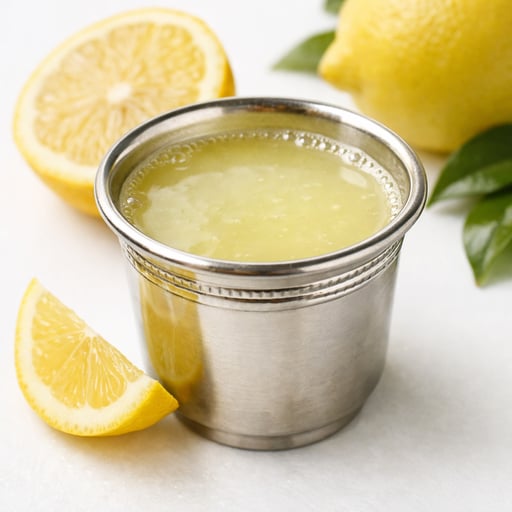
Raw lemon juice
नींबू का रस (कच्चा)
Raw lemon juice is the fresh juice extracted from lemons, commonly used as a souring agent or refreshing addition to beverages and cooking.
Nutrition per 100ml
Nutrient Breakdown
Key Nutrients(12)
% DV = % Daily Value (adult RDA, ICMR 2020). Values per 100ml edible portion.
Use Raw lemon juice in meal plans
17,000+ foods with real-time nutrient tracking, AI generation, and WhatsApp sharing.
Start FreeFree plan · No credit card
Common questions about Raw lemon juice
How many calories are in wedge yields of Raw lemon juice?
wedge yields (6 ml) of Raw lemon juice has about 1 kcal, based on 22 kcal per 100 ml.
How much protein is in Raw lemon juice?
Raw lemon juice provides about 0.4 g of protein per 100 ml.
How much sugar does Raw lemon juice contain?
Raw lemon juice has about 2.5 g of total sugars per 100 ml.
How is raw lemon juice typically used in cooking?
Lemon juice is commonly used to add sourness and flavor to dishes, including chutneys, marinades, beverages, and salads.
Is raw lemon juice suitable for vegan diets?
Yes, raw lemon juice is vegan as it contains no animal-derived ingredients.
How should raw lemon juice be stored to maintain freshness?
Store raw lemon juice refrigerated in a sealed container and use it within a few days for best quality.
About Raw lemon juice
Lemon juice is the liquid obtained from fresh lemons, widely consumed in India and around the world. It is often added to water, tea, or culinary dishes to provide a distinctive sour flavor that enhances taste. Typically extracted by squeezing fresh lemon halves, this juice is enjoyed raw and unprocessed.
This juice is rich in vitamin C, providing approximately 53 mg per 100g, which satisfies about 60% of the daily recommended intake. It contains very small amounts of protein, fat, and natural sugars, contributing to a low-calorie content of roughly 22 kcal per 100 g. Minerals such as potassium, calcium, and iron are present in modest amounts.
Being purely plant-derived and unprocessed, lemon juice is entirely vegan and free from allergens. It is a staple in Indian households for cooking, marination, and as a beverage ingredient, especially in warmer months due to its refreshing quality.
Values per 100ml edible portion.
Nutrition data is for reference only. Values may vary by preparation method, brand, and region. Full disclaimer
Similar foods
Browse all →
Lemons, raw, without peel
Raw lemon peel
Raw lime juice
Raw tangerine juice
Raw limes

Raw acerola juice
असेरोलाज़ रस, कच्चा
Raw loquats
Raw bananas
केला (कच्चा)