

 by Workfile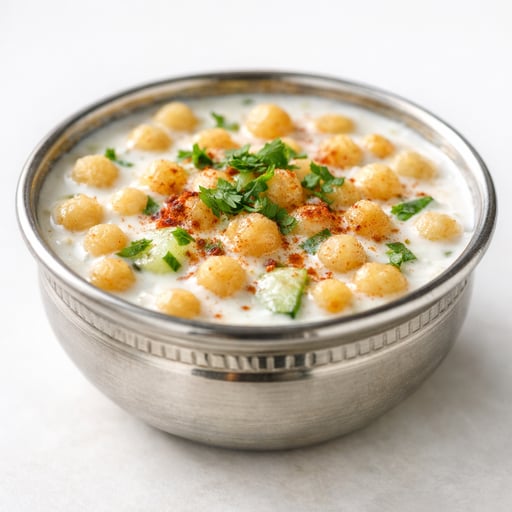
Boondi raita
Also known as: Boondi Raita
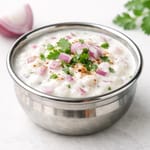
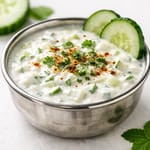
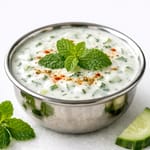
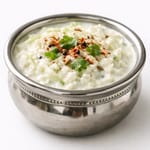
Boondi Raita is a popular Indian side dish made by mixing small fried gram flour balls (boondi) into seasoned yogurt, offering a mildly spiced, creamy accompaniment to meals.
Nutrition per 100g
Nutrient Breakdown
Key Nutrients(15)
% DV = % Daily Value (adult RDA, ICMR 2020). Values per 100g edible portion.
Use Boondi raita in meal plans
17,000+ foods with real-time nutrient tracking, AI generation, and WhatsApp sharing.
Start FreeFree plan · No credit card
Common questions about Boondi raita
How many calories are in 1 bowl of Boondi raita?
1 bowl (329 g) of Boondi raita has about 2263 kcal, based on 688 kcal per 100 g.
How much protein is in Boondi raita?
Boondi raita provides about 2.2 g of protein per 100 g.
How much sugar does Boondi raita contain?
Boondi raita has about 1.9 g of total sugars per 100 g.
What is Boondi Raita typically served with?
Boondi Raita is commonly served as a side dish with biryani, pulao, and various Indian breads like paratha or roti.
Is Boondi Raita suitable for vegetarians?
Yes, Boondi Raita is a vegetarian dish made with yogurt and fried gram flour balls, containing no meat or eggs.
How should Boondi Raita be stored?
Boondi Raita should be refrigerated and consumed within one day for best taste and safety, as the boondi can become soggy over time.
About Boondi raita
Boondi Raita is a traditional Indian condiment commonly served alongside main dishes such as biryani, pulao, or paratha. It features tiny, crispy fried chickpea flour pellets called boondi soaked in yogurt seasoned with spices like roasted cumin, black salt, and sometimes fresh herbs.
This dish provides a refreshing contrast with its creamy texture and subtle tanginess balanced by the light crunch of boondi. It is a vegetarian dish widely consumed across India, suitable for lacto-vegetarians.
Nutritionally, Boondi Raita supplies moderate calories mainly from carbohydrates and fats contributed by the fried boondi and yogurt. Notably, it is rich in Vitamin E due to the oil content used in frying the boondi. While it contains essential minerals like calcium and potassium from the yogurt, claims of other nutrient strengths are not supported by verified data.
- Popular in North and South Indian cuisines
- Served chilled to complement spicy dishes
- Vegetarian and includes dairy
- Contains fried ingredients, so moderate fat content expected
Values per 100g edible portion.
Nutrition data is for reference only. Values may vary by preparation method, brand, and region. Full disclaimer
Contains data from Indian Nutrient Databank (INDB), University of Edinburgh, licensed under CC BY 4.0, modified for presentation.
Report a data issue