


 by Workfile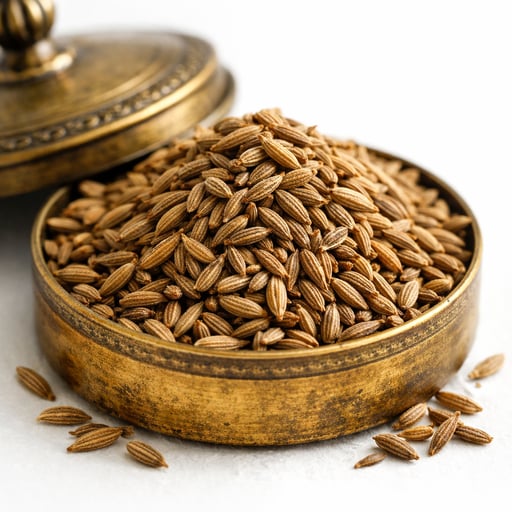
Cumin seeds
Jira
Cuminum cyminum
Also known as: Jeera, Jire, Jiru, Jeerage, Zyur, U jeera
Cumin seeds are aromatic seeds of the Cuminum cyminum plant and are widely used in Indian and Middle Eastern cuisines for their distinct flavor and aroma.
Nutrition per 100g
Nutrient Breakdown
Key Nutrients(21)
% DV = % Daily Value (adult RDA, ICMR 2020). Values per 100g edible portion.
Use Cumin seeds in meal plans
17,000+ foods with real-time nutrient tracking, AI generation, and WhatsApp sharing.
Start FreeFree plan · No credit card
Common questions about Cumin seeds
How many calories are in 1 teaspoon of Cumin seeds?
1 teaspoon (3 g) of Cumin seeds has about 9 kcal, based on 304 kcal per 100 g.
How much protein is in Cumin seeds?
Cumin seeds provides about 13.9 g of protein per 100 g.
How much sugar does Cumin seeds contain?
Cumin seeds has about 1.4 g of total sugars per 100 g.
How are cumin seeds typically used in cooking?
Cumin seeds are commonly toasted or ground and added to Indian dishes like dals, curries, rice, and spice blends to enhance flavor.
Is cumin seed suitable for vegan diets?
Yes, cumin seeds are completely plant-based and suitable for vegan diets.
How should cumin seeds be stored?
Store cumin seeds in an airtight container in a cool, dry place away from sunlight to maintain freshness.
About Cumin seeds
Cumin seeds, known as 15 41effc 2c 3f 39 in Hindi, are small, dried seeds of the Cuminum cyminum plant widely used as a spice in Indian and Middle Eastern cuisines. They have a distinctive warm, earthy, slightly bitter flavor and are often toasted or ground before adding to dishes.
These seeds provide significant levels of several minerals: they are rich in chromium, vitamin K, magnesium, manganese, dietary fiber, iron, copper, and calcium, making them a nutrient-dense spice. Though used in small quantities, they contribute valuable micronutrients and dietary fiber.
Cumin seeds are vegan, gluten-free, and contain no common allergens. Commonly used in dals, curries, rice dishes, and spice blends like garam masala, they enhance flavor and nutritional value without adding fat or sugar. Their glycemic index is not applicable as a spice.
- Rich in chromium and vitamin K
- Good source of magnesium and manganese
- Contains significant iron and calcium
Values per 100g edible portion.
Nutrition data is for reference only. Values may vary by preparation method, brand, and region. Full disclaimer
Similar foods
Browse all →
Cumin seeds baghar
Cumin pulao
Seed cumin
Cumin infused water
Spices, cumin seed
Cumin (cummin) seed, dried, ground
Jal jeera