


 by Workfile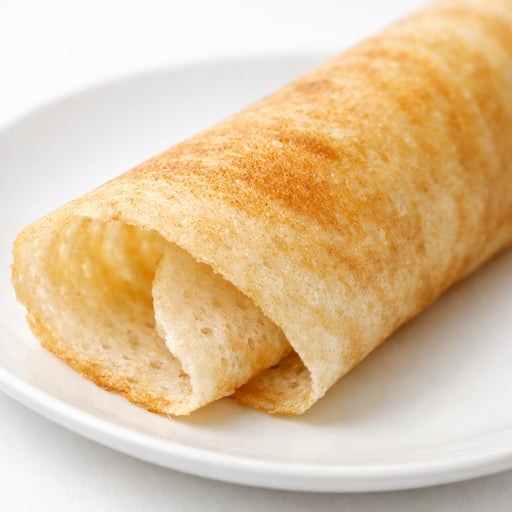
Plain dosa
Also known as: PLAIN DOSA
Plain dosa is a popular South Indian crepe made from fermented rice and lentil batter. Typically served with chutneys and sambar, it is enjoyed as a breakfast or snack.
Nutrition per 100g
Nutrient Breakdown
Key Nutrients(16)
% DV = % Daily Value (adult RDA, ICMR 2020). Values per 100g edible portion.
Use Plain dosa in meal plans
17,000+ foods with real-time nutrient tracking, AI generation, and WhatsApp sharing.
Start FreeFree plan · No credit card
Common questions about Plain dosa
How many calories are in 1 dosa of Plain dosa?
1 dosa (36 g) of Plain dosa has about 137 kcal, based on 381 kcal per 100 g.
How much protein is in Plain dosa?
Plain dosa provides about 10.3 g of protein per 100 g.
How much sugar does Plain dosa contain?
Plain dosa has about 0.7 g of total sugars per 100 g.
What is plain dosa made from?
Plain dosa is made from a fermented batter of rice and urad dal (black gram), cooked on a griddle into a thin crepe.
Is plain dosa suitable for vegetarians?
Yes, plain dosa is vegetarian. It contains no meat, fish, or eggs.
How should plain dosa batter be stored?
The batter is typically refrigerated and can be stored for 2-3 days. Preparing fresh batter daily is common for best fermentation and taste.
About Plain dosa
Dosa is a thin, crispy crepe originating from South India, made from a fermented batter of rice and urad dal (black gram). Traditionally, it is served with various chutneys and sambar (a lentil-based vegetable stew).
This dish is not just a breakfast staple, but it has gained popularity across India and beyond. Dosai-making requires some skill, as the batter needs to be fermented adequately for the best flavor and texture. Nutritionally, dosa is a good source of carbohydrates and provides a modest amount of protein.
While generally low in fat, the oil used for cooking can increase its fat content. It is a vegetarian dish and can fit well into a balanced diet, especially when paired with protein-rich sides. However, it is advisable for those on a low-sodium diet to be cautious of added salt in the preparation.
Values per 100g edible portion.
Nutrition data is for reference only. Values may vary by preparation method, brand, and region. Full disclaimer
Contains data from Indian Nutrient Databank (INDB), University of Edinburgh, licensed under CC BY 4.0, modified for presentation.
Report a data issueSimilar foods
Browse all →
Idli
इडली
Dosa Plain
Semolina dosa
Uttapam
Masala dosa
Instant idli (with semolina)
Appam
Plain khitchdi