


 by Workfile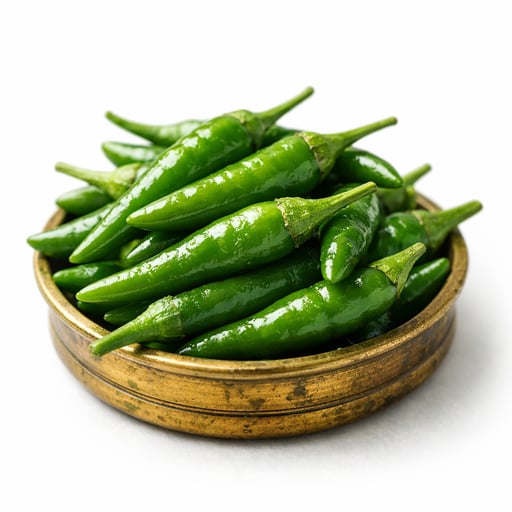
Chillies, green-1
Hara Mirchi
Capsicum annum
Also known as: Kesa jalakia, Chili pepper, Lila marcha, Hasi Menasinakayi, Marach wangun, Sohmynken heh
Green chillies are small, spicy peppers widely used in Indian cuisine to add heat and flavor to dishes. They are known for their strong pungency and significant vitamin C content.
Nutrition per 100g
Nutrient Breakdown
Key Nutrients(16)
% DV = % Daily Value (adult RDA, ICMR 2020). Values per 100g edible portion.
Use Chillies, green-1 in meal plans
17,000+ foods with real-time nutrient tracking, AI generation, and WhatsApp sharing.
Start FreeFree plan · No credit card
Common questions about Chillies, green-1
How many calories are in 1 teaspoon of Chillies, green-1?
1 teaspoon (3 g) of Chillies, green-1 has about 1 kcal, based on 46 kcal per 100 g.
How much protein is in Chillies, green-1?
Chillies, green-1 provides about 2.6 g of protein per 100 g.
How much sugar does Chillies, green-1 contain?
Chillies, green-1 has about 0.7 g of total sugars per 100 g.
How are green chillies commonly used in cooking?
Green chillies are often chopped or sliced and added to curries, pickles, chutneys, and salads to add spice and flavor.
Are green chillies suitable for vegan diets?
Yes, green chillies are plant-based and suitable for vegan and vegetarian diets.
How should I store green chillies to keep them fresh?
Store green chillies in a cool, dry place or in the refrigerator to maintain freshness for up to a week.
About Chillies, green-1
Green chillies are the unripe, green fruits of hot chili pepper plants, commonly used to impart spiciness and flavor to a variety of Indian dishes and condiments. They are typically chopped, sliced, or used whole in cooking to provide heat and aroma.
Nutritionally, green chillies provide significant amounts of vitamin C, as well as vitamins K and B6, and chromium in notable amounts as per verified nutrient data. They contribute minimal calories and fat, while containing small amounts of protein and carbohydrates.
- They are eaten raw in salads, pickled, or cooked in various savory preparations.
- Suitable for vegan diets, they contain no allergens.
- Their vibrant heat makes them popular for enhancing flavor without adding fat or sugars, making them a frequent ingredient in Indian households.
Values per 100g edible portion.
Nutrition data is for reference only. Values may vary by preparation method, brand, and region. Full disclaimer
Similar foods
Browse all →
Chillies, green-3
Hara Mirchi
Chillies, green-2
Hara Mirchi
Chillies, green-5
Hara Mirchi
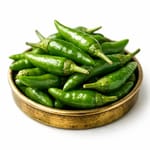
Chillies, green-4
Hara Mirchi
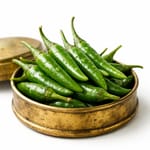
Chillies, green-6
Hara Mirchi
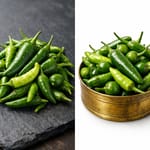
Chillies, green - all varieties
Hara Mirchi
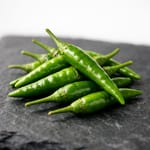
Chillies, green-7
Hara Mirchi
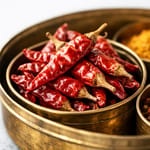
Red chillies
Mirchi