


 by Workfile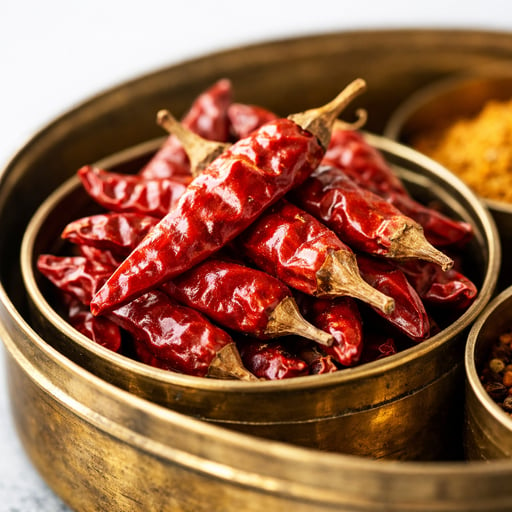
Red chillies
Mirchi
Capsicum annum
Also known as: Sukan jolokia, Shuckhuo Lonka, Red chilli pepper, Lal marcha, Ona Menasinakayi, Sohmynken trykhong
Red chillies are pungent peppers commonly used in Indian cooking to add heat and flavour. They are rich in vitamin K, chromium, and fibre.
Nutrition per 100g
Nutrient Breakdown
Key Nutrients(23)
% DV = % Daily Value (adult RDA, ICMR 2020). Values per 100g edible portion.
Use Red chillies in meal plans
17,000+ foods with real-time nutrient tracking, AI generation, and WhatsApp sharing.
Start FreeFree plan · No credit card
Common questions about Red chillies
How many calories are in 1 teaspoon of Red chillies?
1 teaspoon (3 g) of Red chillies has about 7 kcal, based on 237 kcal per 100 g.
How much protein is in Red chillies?
Red chillies provides about 12.7 g of protein per 100 g.
How much sugar does Red chillies contain?
Red chillies has about 4.7 g of total sugars per 100 g.
How is red chilli commonly used in cooking?
Red chilli is used fresh, dried, or powdered to add heat and flavour to Indian dishes like curries, pickles, and spice mixes.
Is red chilli suitable for vegan diets?
Yes, red chilli is a plant-based ingredient and is suitable for vegan diets.
How should red chillies be stored?
Store dried red chillies in a cool, dry place away from sunlight to maintain their flavour and potency.
About Red chillies
Red chillies are the dried or fresh pods of Capsicum annuum and a staple spice in Indian cuisine, used to impart heat and vibrant red colour to many dishes. They are usually eaten dried, powdered, or fresh, and can vary from mild to very hot depending on the variety.
They provide significant amounts of vitamin K, chromium, and dietary fibre, making them notable for their micronutrient content. Apart from adding pungency, they contribute to potassium, copper, magnesium, riboflavin, and niacin intake.
As a vegan food with negligible fat, they are suitable for diverse diets. Their potent flavour means only small quantities are typically used, enhancing meals without contributing many calories.
- Popular in spice blends, pickles, and curry pastes
- Provides dietary fibre and micronutrients
- Used dried, powdered, or fresh in Indian kitchens
Values per 100g edible portion.
Nutrition data is for reference only. Values may vary by preparation method, brand, and region. Full disclaimer
Similar foods
Browse all →
Chillies, green-3
Hara Mirchi
Chillies, green-6
Hara Mirchi
Chillies, green-2
Hara Mirchi
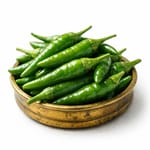
Chillies, green-1
Hara Mirchi
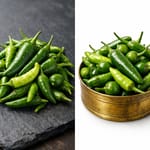
Chillies, green - all varieties
Hara Mirchi
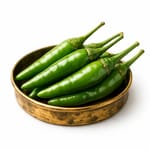
Chillies, green-5
Hara Mirchi
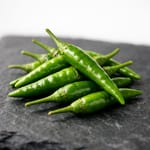
Chillies, green-7
Hara Mirchi
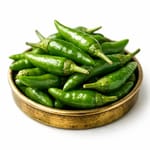
Chillies, green-4
Hara Mirchi