


 by Workfile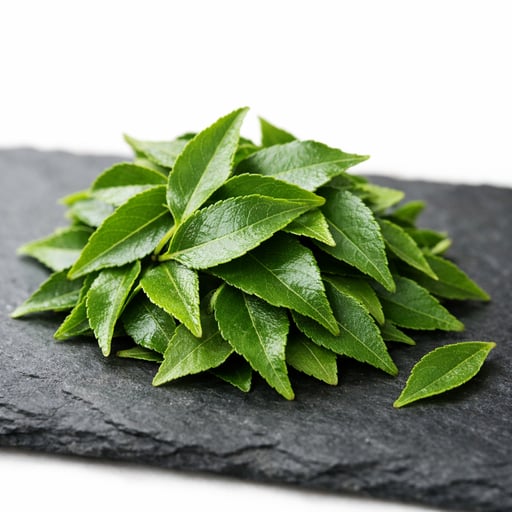
Curry leaves
Gandhela
Murraya koenigii
Also known as: Narasingha paat, Karhi-pat, Sweet Neem leaves, Kadi umdo, Karibevu, Curry patta
Curry leaves, known as कड़ी पत्ता in Hindi, are aromatic leaves commonly used in Indian cooking to enhance flavor. They provide significant amounts of calcium, iron, fiber, and folate, making them nutritionally valuable as a spice ingredient.
Nutrition per 100g
Nutrient Breakdown
Key Nutrients(21)
% DV = % Daily Value (adult RDA, ICMR 2020). Values per 100g edible portion.
Use Curry leaves in meal plans
17,000+ foods with real-time nutrient tracking, AI generation, and WhatsApp sharing.
Start FreeFree plan · No credit card
Common questions about Curry leaves
How many calories are in 1 teaspoon of Curry leaves?
1 teaspoon (3 g) of Curry leaves has about 2 kcal, based on 64 kcal per 100 g.
How much protein is in Curry leaves?
Curry leaves provides about 7.4 g of protein per 100 g.
How much sugar does Curry leaves contain?
Curry leaves has about 0.6 g of total sugars per 100 g.
What culinary uses do curry leaves have?
Curry leaves are commonly used as a tempering spice in Indian cuisine, adding a distinct, aromatic flavor to dishes like curries, dals, and rice.
How are curry leaves typically served?
Curry leaves can be used whole in cooking for their flavor and aroma, and they are often removed before serving, although some may enjoy them as part of the dish.
Are curry leaves suitable for vegan diets?
Yes, curry leaves are entirely plant-based, making them suitable for both vegetarian and vegan diets.
About Curry leaves
Curry leaves are an integral ingredient in Indian cuisine, valued for their distinctive aroma and flavor enhancement especially in South Indian and coastal dishes. These leaves are typically fresh, dark green, and used whole or chopped in various recipes such as dals, chutneys, and curries.
They provide several important nutrients including a high amount of calcium and iron, good source of dietary fiber, and significant folate content. Additionally, curry leaves contain chromium and selenium which contribute to their nutritional profile.
Used fresh, curry leaves lend a unique taste and are added during tempering to release their essential oils. They are vegan and free from common allergens, making them suitable for a wide range of diets. Their low fat and calorie content make them a healthy spice choice.
Values per 100g edible portion.
Nutrition data is for reference only. Values may vary by preparation method, brand, and region. Full disclaimer
Similar foods
Browse all →Fresh curry leaves
Drumstick leaves
Saijan patta
Mustard leaves
Sarson ka sag
Parsley
Green colocasia leaves
Arvi ka sag
Red gogu leaves
Pitwa
Green gogu leaves
Pitwa