


 by Workfile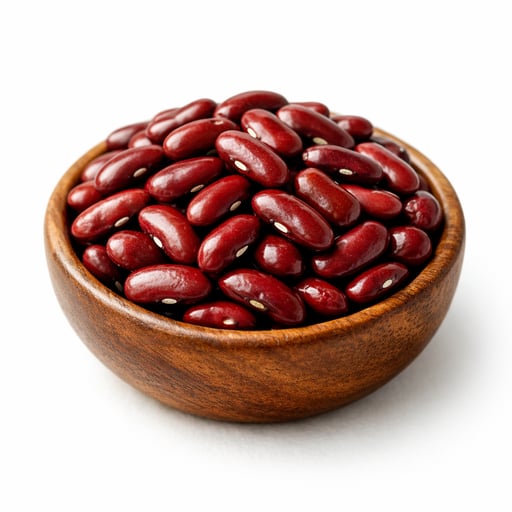
Red rajmah
Rajmah
Phaseolus vulgaris
Also known as: Barbati beej, Rajma, Razma, Phansi, Thugare bele, Razma, Rajma rit
Rajmah, or red kidney beans, are a popular legume in Indian cuisine, commonly used in various curries and dishes for their rich flavor and nutritional benefits.
Nutrition per 100g
Nutrient Breakdown
Key Nutrients(20)
% DV = % Daily Value (adult RDA, ICMR 2020). Values per 100g edible portion.
Use Red rajmah in meal plans
17,000+ foods with real-time nutrient tracking, AI generation, and WhatsApp sharing.
Start FreeFree plan · No credit card
Common questions about Red rajmah
How many calories are in 1 katori cooked dal of Red rajmah?
1 katori cooked dal (150 g) of Red rajmah has about 449 kcal, based on 299 kcal per 100 g.
How much protein is in Red rajmah?
Red rajmah provides about 19.9 g of protein per 100 g.
How much sugar does Red rajmah contain?
Red rajmah has about 1.5 g of total sugars per 100 g.
What is Rajmah commonly used for in cooking?
Rajmah (red kidney beans) are used in Indian cuisine mainly to prepare Rajmah Masala, a spiced curry served with rice or roti.
Is Rajmah suitable for a vegan diet?
Yes, Rajmah is a plant-based food and suitable for vegan diets.
How should Rajmah be stored to maintain freshness?
Dry Rajmah should be stored in an airtight container in a cool, dry place. Cooked Rajmah should be refrigerated and consumed within 2-3 days.
About Red rajmah
Rajmah, known as red kidney beans, is a staple in Indian households. This versatile legume is not only rich in taste but also packed with nutrients, making it a popular choice for wholesome meals. Typically served in a spicy gravy with rice, Rajmah is a comfort food that many enjoy, particularly in North India.
Nutritionally, Rajmah is a great source of plant-based protein, facilitating muscle repair and immune function. It's also high in dietary fiber, which aids digestion and helps maintain a healthy weight. Additionally, it's a good source of folate and iron, essential for blood health and energy production.
Being vegetarian and low in fat, Rajmah is an excellent addition to a balanced diet. It also fits well in diabetic-friendly meal plans due to its low glycemic index and high fiber content, making it suitable for those watching their sugar levels.
Values per 100g edible portion.
Nutrition data is for reference only. Values may vary by preparation method, brand, and region. Full disclaimer
Similar foods
Browse all →
Brown rajmah
Rajmah
Black rajmah
Rajmah
Dal red gram
Whole red gram
Arhar sabud
Brown lentil whole
Masur dal
Ricebean
Meth
Bajra
Bajra
Rajma Masala