


 by Workfile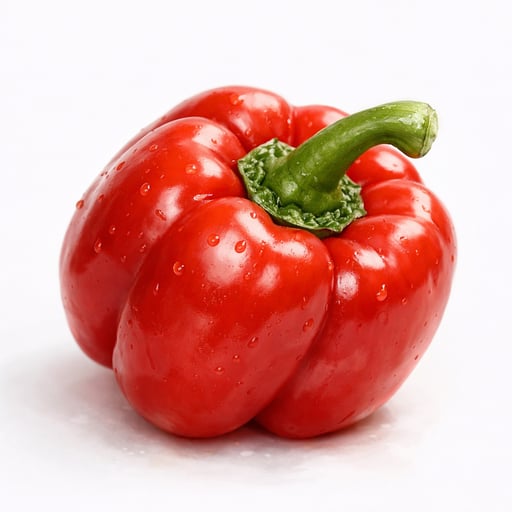
Red capsicum
Shimla mirch
Capsicum annuum
Also known as: Kashmiri jalakia, Lanka, Bhuler marcha, Donnmena- sinakayi, Shimla marchwangan, Sohmynken jhur jyrngam
Red capsicum, also known as red bell pepper, is a popular vegetable known for its sweet flavor and bright color. It is rich in Vitamin C, Vitamin K, Chromium, and Folate (Vitamin B9).
Nutrition per 100g
Nutrient Breakdown
Key Nutrients(15)
% DV = % Daily Value (adult RDA, ICMR 2020). Values per 100g edible portion.
Use Red capsicum in meal plans
17,000+ foods with real-time nutrient tracking, AI generation, and WhatsApp sharing.
Start FreeFree plan · No credit card
Common questions about Red capsicum
How many calories are in 1 katori cooked sabzi of Red capsicum?
1 katori cooked sabzi (150 g) of Red capsicum has about 30 kcal, based on 20 kcal per 100 g.
How much protein is in Red capsicum?
Red capsicum provides about 1.5 g of protein per 100 g.
How much sugar does Red capsicum contain?
Red capsicum has about 0.9 g of total sugars per 100 g.
How is red capsicum typically used in cooking?
Red capsicum is commonly eaten raw in salads, or cooked in dishes such as curries, stir-fries, and stuffed preparations.
Is red capsicum suitable for a vegan diet?
Yes, red capsicum is a plant-based vegetable and suitable for vegan diets.
How should red capsicum be stored to maintain freshness?
Store red capsicum in the refrigerator crisper drawer, preferably in a plastic bag, to keep it fresh for up to a week.
About Red capsicum
Red capsicum, or red bell pepper, originates from Central and South America and is widely used in Indian and international cuisines. It is typically eaten raw in salads, cooked in curries, stir-fries, or stuffed and baked.
- Rich in Vitamin C, which is essential for immune function and skin health.
- Provides significant amounts of Vitamin K, Chromium, and Folate (Vitamin B9), which support blood health and metabolic processes.
- It adds crisp texture and a mildly sweet flavor to dishes, making it versatile for multiple meal types.
This vegetable is vegan, low in calories, and contains modest amounts of fiber. It is best consumed fresh or lightly cooked to preserve its nutrient content.
Values per 100g edible portion.
Nutrition data is for reference only. Values may vary by preparation method, brand, and region. Full disclaimer
Similar foods
Browse all →
Green capsicum
Shimla mirch
Yellow capsicum
Shimla mirch
Red chillies
Mirchi
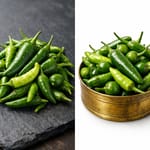
Chillies, green - all varieties
Hara Mirchi
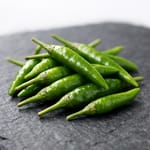
Chillies, green-2
Hara Mirchi
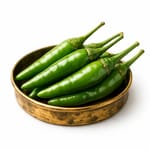
Chillies, green-5
Hara Mirchi
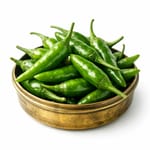
Chillies, green-3
Hara Mirchi
Chillies, green-1
Hara Mirchi