


 by Workfile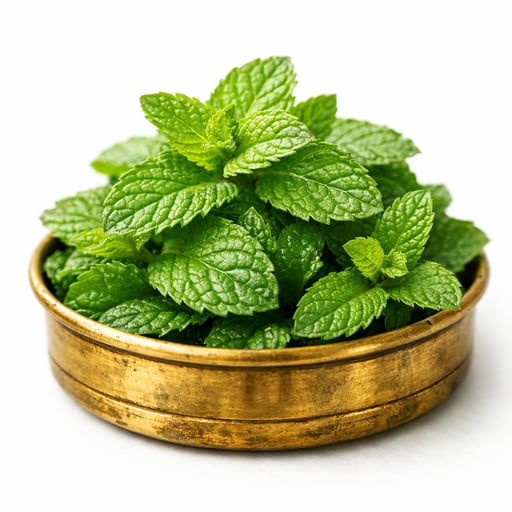
Mint leaves
Pudina
Mentha spicata
Also known as: Podina, Mentha, Phudino, Pudinth, Nungsihidak, Baabari
Fresh mint leaves are a popular aromatic herb used widely in Indian cuisine for flavoring and garnishing. They are a rich source of key minerals and vitamins including iron, folate, and vitamin K.
Nutrition per 100g
Nutrient Breakdown
Key Nutrients(19)
% DV = % Daily Value (adult RDA, ICMR 2020). Values per 100g edible portion.
Use Mint leaves in meal plans
17,000+ foods with real-time nutrient tracking, AI generation, and WhatsApp sharing.
Start FreeFree plan · No credit card
Common questions about Mint leaves
How many calories are in 1 teaspoon of Mint leaves?
1 teaspoon (3 g) of Mint leaves has about 1 kcal, based on 37 kcal per 100 g.
How much protein is in Mint leaves?
Mint leaves provides about 4.7 g of protein per 100 g.
How much sugar does Mint leaves contain?
Mint leaves has about 0.1 g of total sugars per 100 g.
How are mint leaves used in cooking?
Mint leaves are used fresh as a garnish, in chutneys, salads, beverages like mint tea, and as a flavoring herb in various Indian dishes.
Is mint suitable for vegan diets?
Yes, mint leaves are plant-based and suitable for vegan diets.
How should fresh mint leaves be stored?
Store fresh mint leaves in the refrigerator wrapped in a damp paper towel inside a plastic bag to keep them fresh longer.
About Mint leaves
Mint leaves, also known as "पुदीना के पत्ते" in Hindi, are aromatic green leaves commonly used in Indian cooking to add freshness and flavor to dishes, chutneys, and drinks.
They are usually consumed raw or fresh, preserving their rich nutrient content. Mint leaves provide significant amounts of minerals such as iron and chromium, and are an excellent source of vitamin K and folate (B9). These nutrients play important roles in various bodily functions.
- The leaves contain notable iron content, supporting oxygen transport in blood.
- They are rich in vitamin K, necessary for blood clotting.
- Folate contributes to DNA synthesis and repair.
The leaves are vegan and free from common allergens, making them suitable for most diets. They are best stored fresh and used quickly to retain flavor and nutrient integrity.
Values per 100g edible portion.
Nutrition data is for reference only. Values may vary by preparation method, brand, and region. Full disclaimer
Similar foods
Browse all →
Mint raita
Parsley
Mint and coriander chutney
Mint and peanut raita
Fenugreek leaves
Methi sag
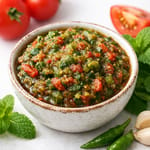
Mint tomato chutney
Drumstick leaves
Saijan patta