


 by Workfile
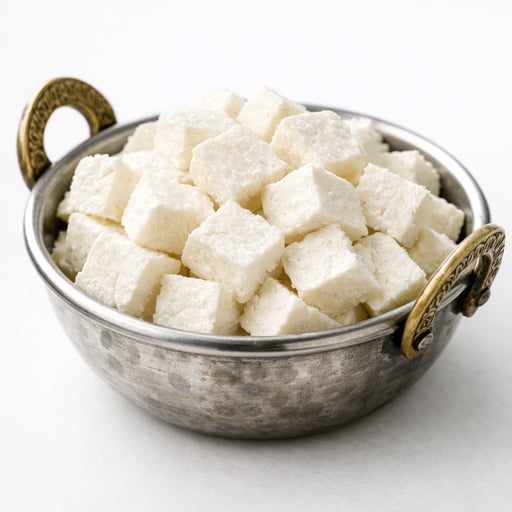
Paneer
Chhena
Also known as: Paneer, Chena, Cottage Cheese, Tali, Chaman, Palkatti
Paneer is a fresh cheese common in South Asian cuisine, made from curdled milk and is a rich source of protein and calcium.
Nutrition per 100g
Nutrient Breakdown
Key Nutrients(15)
% DV = % Daily Value (adult RDA, ICMR 2020). Values per 100g edible portion.
Use Paneer in meal plans
17,000+ foods with real-time nutrient tracking, AI generation, and WhatsApp sharing.
Start FreeFree plan · No credit card
Common questions about Paneer
How many calories are in 1 cube (~30g) of Paneer?
1 cube (~30g) (30 g) of Paneer has about 77 kcal, based on 258 kcal per 100 g.
How much protein is in Paneer?
Paneer provides about 18.9 g of protein per 100 g.
How much sugar does Paneer contain?
Paneer has about 11.6 g of total sugars per 100 g.
Is paneer suitable for vegetarians?
Yes, paneer is a vegetarian food made from milk and contains no meat or eggs.
How is paneer commonly used in cooking?
Paneer is used in various Indian dishes such as paneer tikka, paneer curry, and as a filling in snacks and breads.
How should paneer be stored?
Paneer should be refrigerated and can be stored in an airtight container for a few days. For longer storage, it can be frozen.
About Paneer
Paneer, also known as cottage cheese, is a fresh cheese made from curdled milk. Widely used in Indian cooking, it can be found in many popular dishes like Paneer Tikka and Palak Paneer. Paneer is particularly favored for its high protein content, making it a suitable option for vegetarians looking to increase their protein intake.
Typically, paneer can be cooked in various ways - grilled, sautéed, or added to curries. It can serve as a versatile ingredient in both savory and sweet dishes. Not only is paneer a rich source of calcium, but it also contains essential vitamins and minerals such as zinc and vitamin B12. For those following a vegetarian diet, paneer offers a balanced option for a nutritious meal.
Paneer is suitable for various meal settings, including lunch, dinner, and snacks. However, it is advisable to consume it in moderation due to its fat content. Diabetic clients should also be aware of the carbohydrate content, though it is relatively low, making paneer manageable within a balanced diet.
Values per 100g edible portion.
Nutrition data is for reference only. Values may vary by preparation method, brand, and region. Full disclaimer
Similar foods
Browse all →
Paneer kheer
Chhena poda
Chenna murki
Paneer cheese
Shahi paneer

Spinach paneer

Kadhai Paneer
Chilli paneer
चिल्ली पनीर