


 by Workfile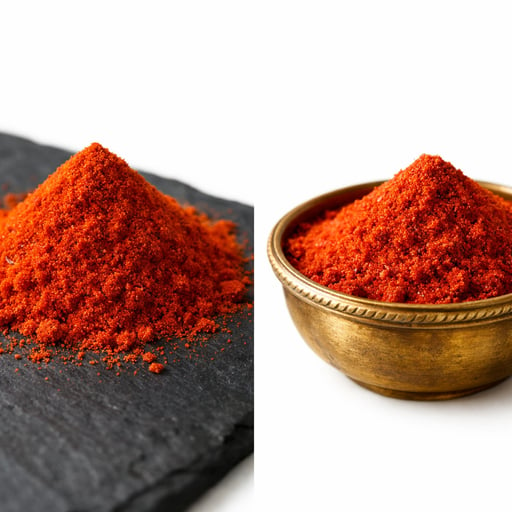
Paprika spices
पपरिका
Capsicum annuum
Paprika is a ground spice made from dried red peppers, commonly used to add color and mild flavor to Indian and global cuisines. It is rich in vitamin A, vitamin E, vitamin K, vitamin B6, fiber, and iron.
Nutrition per 100g
Nutrient Breakdown
Key Nutrients(24)
% DV = % Daily Value (adult RDA, ICMR 2020). Values per 100g edible portion.
Use Paprika spices in meal plans
17,000+ foods with real-time nutrient tracking, AI generation, and WhatsApp sharing.
Start FreeFree plan · No credit card
Common questions about Paprika spices
How many calories are in tbsp of Paprika spices?
tbsp (7 g) of Paprika spices has about 19 kcal, based on 282 kcal per 100 g.
How much protein is in Paprika spices?
Paprika spices provides about 14.1 g of protein per 100 g.
How much sugar does Paprika spices contain?
Paprika spices has about 10.3 g of total sugars per 100 g.
How is paprika typically used in cooking?
Paprika is commonly added as a ground spice to curries, dals, snacks, and marinades to provide color and mild flavor.
Is paprika suitable for vegans?
Yes, paprika is a plant-based spice and suitable for vegan diets.
How should paprika be stored to maintain freshness?
Store paprika in a cool, dry place in an airtight container, away from sunlight to preserve its flavor and color.
About Paprika spices
Paprika is a vibrant red spice made by grinding dried red peppers, widely used in Indian cooking as well as other global cuisines. It is valued for its pungent but mild flavor and bright red color, lending depth to curries, dals, snacks, and various dishes.
Nutritionally, paprika is rich in vitamin A, providing a substantial portion of daily needs, along with high amounts of vitamin E, vitamin K, and vitamin B6. It also contains significant dietary fiber and iron, making it a nutrient-dense spice often overlooked in daily diets.
This spice is vegan and naturally free from common allergens. Due to its powder form and concentrated nature, it is used sparingly in cooking. Paprika is typically stored in a cool, dry place in airtight containers to preserve its flavor and color.
- High in vitamin A (RAE)
- High in vitamin E
- Good source of dietary fiber
- Rich in iron
Values per 100g edible portion.
Nutrition data is for reference only. Values may vary by preparation method, brand, and region. Full disclaimer
Similar foods
Browse all →Spices, parsley, dried
Spices, chili powder
Saffron spices
Spices, pepper, white
Spices, pepper, black
Spices, turmeric, ground
Cardamom spices
Spices, curry powder