


 by Workfile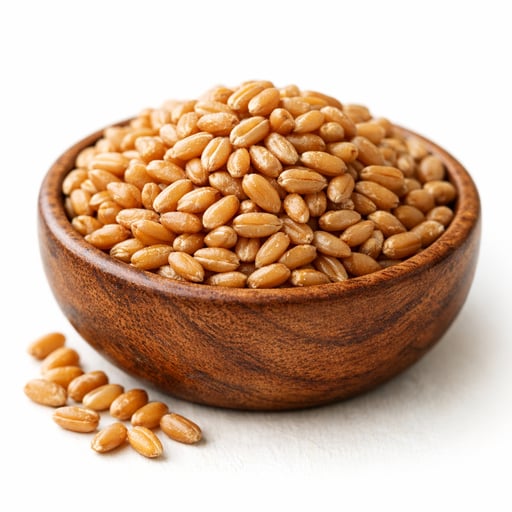
Whole wheat
Gehun
Triticum aestivum
Also known as: Ghehu, Gom, Ghaun, Godhi, Kinek, Ukew
Nutrition per 100g
Nutrient Breakdown
Key Nutrients(20)
% DV = % Daily Value (adult RDA, ICMR 2020). Values per 100g edible portion.
Use Whole wheat in meal plans
17,000+ foods with real-time nutrient tracking, AI generation, and WhatsApp sharing.
Start FreeFree plan · No credit card
Common questions about Whole wheat
How many calories are in 1 katori cooked rice of Whole wheat?
1 katori cooked rice (150 g) of Whole wheat has about 483 kcal, based on 322 kcal per 100 g.
How much protein is in Whole wheat?
Whole wheat provides about 10.6 g of protein per 100 g.
How much sugar does Whole wheat contain?
Whole wheat has about 1.8 g of total sugars per 100 g.
How is whole wheat commonly used in Indian cuisine?
Whole wheat is commonly ground into flour (atta) to make rotis, chapatis, and other flatbreads.
Is whole wheat suitable for vegans?
Yes, whole wheat is 100% plant-based and suitable for vegan diets.
How should whole wheat be stored for best quality?
Store whole wheat grains in a cool, dry place in an airtight container to maintain freshness and prevent pests.
About Whole wheat
Whole wheat is the entire wheat kernel including the bran, germ, and endosperm, commonly used in many Indian households for making various flours and dishes such as rotis and breads. It provides significant amounts of essential minerals such as selenium, manganese, phosphorus, copper, magnesium, and zinc, along with a good amount of dietary fiber.
As a staple cereal, whole wheat is rich in selenium and manganese, and a good source of dietary fiber and several other minerals important for nutrient diversity in vegetarian and vegan diets. It is naturally free from cholesterol and animal products, making it suitable for vegan diets.
Whole wheat is typically consumed in its ground form as flour (atta) and is a fundamental ingredient in Indian cooking.
Values per 100g edible portion.
Nutrition data is for reference only. Values may vary by preparation method, brand, and region. Full disclaimer
Similar foods
Browse all →
Bulgur wheat
Dalia
Semolina wheat
Gehun suji
Atta wheat flour
Atta
Whole green gram
Mung
Whole red gram
Arhar sabud
Dry maize
Makka
Whole bengal gram
Chana, Kala chana
Whole horse gram
Kulthi