


 by Workfile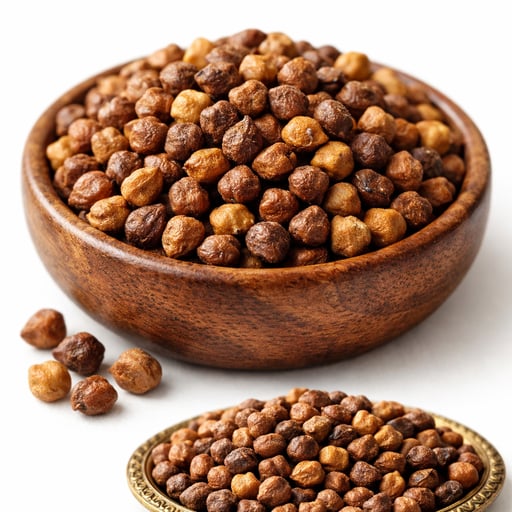
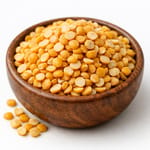
Whole bengal gram
Chana, Kala chana
Cicer arietinum
Also known as: Boot, Chola, Chickpea, Chana, Kadale, Chanu
Bengal gram, also known as chana, is a popular legume in Indian cuisine, rich in protein and dietary fiber. It is commonly used in curries, salads, and snacks.
Nutrition per 100g
Nutrient Breakdown
Key Nutrients(22)
% DV = % Daily Value (adult RDA, ICMR 2020). Values per 100g edible portion.
Use Whole bengal gram in meal plans
17,000+ foods with real-time nutrient tracking, AI generation, and WhatsApp sharing.
Start FreeFree plan · No credit card
Common questions about Whole bengal gram
How many calories are in 1 katori cooked dal of Whole bengal gram?
1 katori cooked dal (150 g) of Whole bengal gram has about 431 kcal, based on 287 kcal per 100 g.
How much protein is in Whole bengal gram?
Whole bengal gram provides about 18.8 g of protein per 100 g.
How much sugar does Whole bengal gram contain?
Whole bengal gram has about 1 g of total sugars per 100 g.
How is Bengal gram typically used in cooking?
Bengal gram is soaked and boiled to prepare dals, snacks like sundal, or can be ground into flour for various recipes.
Is Bengal gram suitable for vegans?
Yes, whole Bengal gram is vegan and contains no animal products.
How should Bengal gram be stored?
Store whole Bengal gram in an airtight container in a cool, dry place to maintain freshness.
About Whole bengal gram
Bengal gram, also known as chana or chole, is a popular legume widely consumed in India and various parts of the world. It has a distinct nutty flavor and is often cooked in curries, used to make salads, or ground into flour for various culinary applications.
Nutritionally, Bengal gram is an excellent source of protein, making it a favorite among vegetarians and those looking to increase their protein intake. It is also high in dietary fiber, which aids in digestion and helps maintain blood sugar levels, making it a suitable option for diabetic individuals. Additionally, it provides essential vitamins and minerals such as folate and iron.
Incorporating Bengal gram into your diet can support overall health, and it fits well in various meal slots such as lunch and dinner. It's a versatile ingredient that can be included in salads, curries, and snacks.
Values per 100g edible portion.
Nutrition data is for reference only. Values may vary by preparation method, brand, and region. Full disclaimer
Similar foods
Browse all →
Dal bengal gram
Chan-ki-dal
Whole black gram
Chhilke wali urad dal
Whole green gram
Mung
Split bengal gram dal
Whole red gram
Arhar sabud
Whole horse gram
Kulthi
Dal black gram
Urad dal
Dal red gram