


 by Workfile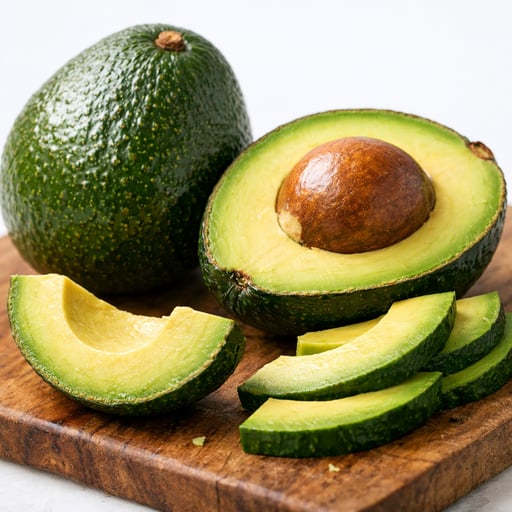
Avocado fruit
Makhanphal
Persea americana
Also known as: Kulunashpati, Bennephala/Bennehannu, Goshtub tang, Aathachakka/ Venna-pazham, Makhan phal, Vennaipazham.
Avocado is a creamy-textured fruit known for its mild taste and versatility in salads and spreads. It contains significant amounts of vitamin K, copper, folate, dietary fiber, pantothenic acid, and manganese.
Nutrition per 100g
Nutrient Breakdown
Key Nutrients(17)
% DV = % Daily Value (adult RDA, ICMR 2020). Values per 100g edible portion.
Use Avocado fruit in meal plans
17,000+ foods with real-time nutrient tracking, AI generation, and WhatsApp sharing.
Start FreeFree plan · No credit card
Common questions about Avocado fruit
How many calories are in 1 medium fruit of Avocado fruit?
1 medium fruit (120 g) of Avocado fruit has about 173 kcal, based on 144 kcal per 100 g.
How much protein is in Avocado fruit?
Avocado fruit provides about 3 g of protein per 100 g.
How much sugar does Avocado fruit contain?
Avocado fruit has about 1.7 g of total sugars per 100 g.
How is avocado commonly used in Indian cuisine?
Avocado is typically eaten raw, added to salads, sandwiches, or used as a spread in Indian households.
Is avocado suitable for vegans?
Yes, avocado is a fruit and is suitable for vegan diets as it contains no animal products.
What is the best way to store an avocado to keep it fresh?
Store unripe avocados at room temperature until ripe; then refrigerate to slow ripening and extend freshness.
About Avocado fruit
Avocado is a nutrient-dense fruit originally native to Central and South America, now grown and consumed worldwide including in India. It is typically eaten raw, sliced in salads, mashed as a spread, or used in smoothies.
Avocado fruit provides significant amounts of vitamin K, copper, folate (B9), dietary fiber, pantothenic acid (B5), and manganese, as evidenced by its high percentage of daily values for these nutrients. These nutrients support various bodily functions including blood clotting, cellular metabolism, and digestive health.
It is vegan and naturally free from common allergens. The creamy texture and mild taste make it suitable for a variety of culinary preparations without cooking. Avocado's moderate glycemic index makes it appropriate for balanced diets.
Values per 100g edible portion.
Nutrition data is for reference only. Values may vary by preparation method, brand, and region. Full disclaimer
Similar foods
Browse all →Banana, ripe, poovam
Kela
Banana, ripe, montham
Kela
Banana, ripe, robusta
Kela
Banana, ripe, red
Kela
Ripe jack fruit
Kathal
Mango, ripe, gulabkhas
Aam
Mango, ripe, banganapalli
Aam

Processed apricot
Khoomani