


 by Workfile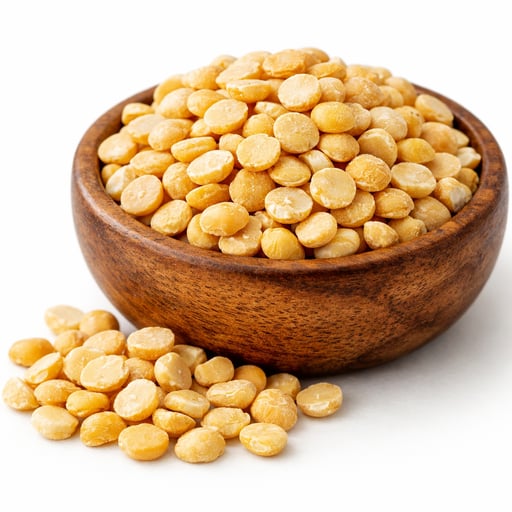
Dry peas
Sukhi Matar
Pisum sativum
Also known as: Gota motor, Matar, Sukha vatana, Batani, Kaza, Shana mator
Nutrition per 100g
Nutrient Breakdown
Key Nutrients(21)
% DV = % Daily Value (adult RDA, ICMR 2020). Values per 100g edible portion.
Use Dry peas in meal plans
17,000+ foods with real-time nutrient tracking, AI generation, and WhatsApp sharing.
Start FreeFree plan · No credit card
Common questions about Dry peas
How many calories are in 1 katori cooked dal of Dry peas?
1 katori cooked dal (150 g) of Dry peas has about 455 kcal, based on 303 kcal per 100 g.
How much protein is in Dry peas?
Dry peas provides about 20.4 g of protein per 100 g.
How much sugar does Dry peas contain?
Dry peas has about 2 g of total sugars per 100 g.
How are dry peas commonly used in cooking?
They are soaked and cooked to make dals, soups, and stews commonly consumed in Indian and global dishes.
Is dry peas suitable for vegan diets?
Yes, dry peas are plant-based and classified as vegan with no animal products.
How should dry peas be stored?
Store in a cool, dry place in an airtight container to maintain quality and prevent moisture.
About Dry peas
Dried peas are mature seeds of the pea plant, commonly used in Indian and global cuisines. They are often soaked and cooked before consumption, providing a rich plant-based protein source.
They are high in protein, good sources of dietary fiber, and contain significant amounts of folate and minerals like phosphorus and magnesium. These nutritional properties make dry peas a staple pulse in vegan and vegetarian diets.
They contain no vitamin A, vitamin B12, vitamin C, or vitamin D. Their low fat content contributes to a low-calorie dense food suitable for various meals.
Dry peas are commonly used to make dals, soups, and stews across many cuisines. They require soaking or boiling before consumption to improve digestibility and palatability.
Values per 100g edible portion.
Nutrition data is for reference only. Values may vary by preparation method, brand, and region. Full disclaimer
Similar foods
Browse all →Fresh peas
Matar
Whole red gram
Arhar sabud
Dal red gram
Whole green gram
Mung
Brown lentil whole
Masur dal
Dal green gram
Mug dal
Moth bean
Motha
Whole black gram
Chhilke wali urad dal